
The Grand Festival of Asia
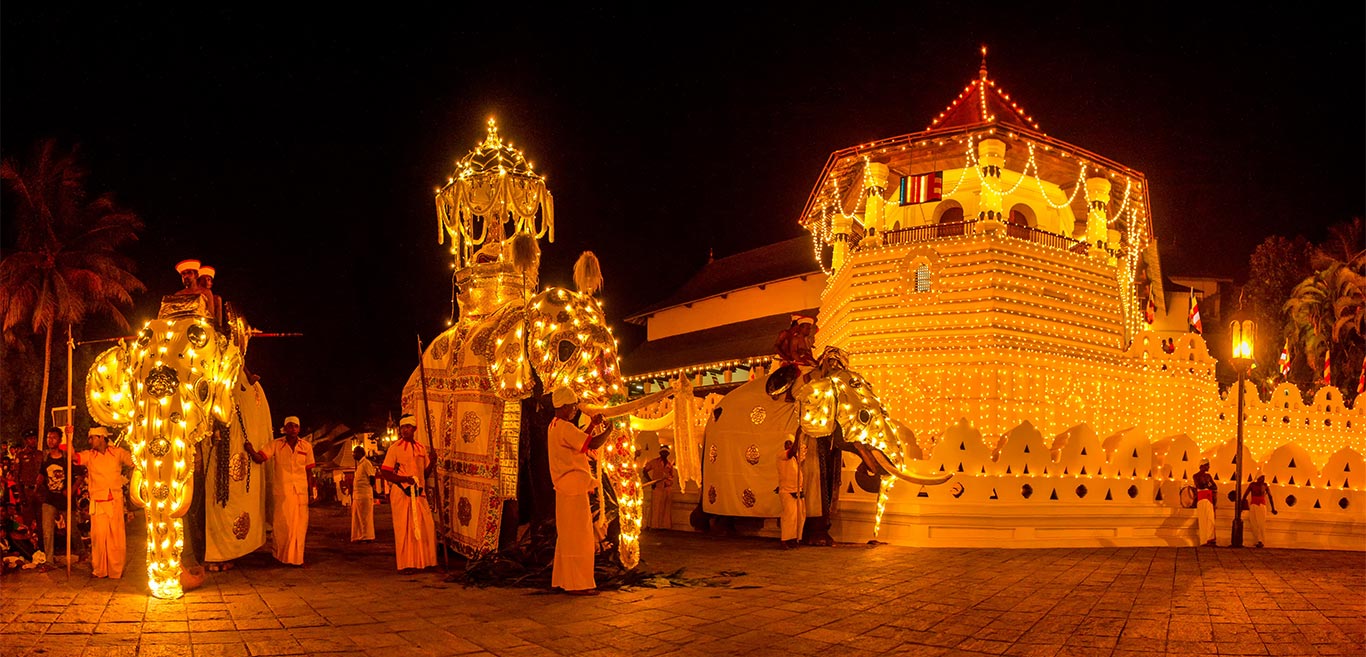
The Kandy Esala Perahera stands as one of Asia's oldest and most spectacular religious festivals, drawing hundreds of thousands of spectators to Sri Lanka's cultural capital each August. For ten magical nights during the full moon of Esala (July/August), the historic city transforms into a stage for one of Buddhism's most magnificent processions. Over 100 magnificently decorated elephants, thousands of traditional dancers, drummers, whip crackers, and torch bearers parade through Kandy's streets in honor of the Sacred Tooth Relic of Buddha housed in the Temple of the Tooth. The sight of the Maligawa Tusker (chief elephant) carrying the golden casket containing the relic, surrounded by traditional performers and thousands of oil lamps, creates an unforgettable spectacle of devotion, culture, and pageantry.
The festival's origins trace back centuries to the 4th century CE when the Sacred Tooth Relic arrived in Sri Lanka, though the current format evolved during the Kandyan Kingdom period (1592-1815). The Perahera serves multiple purposes. Honoring Buddha's tooth relic, paying respect to four guardian deities whose devales (shrines) also participate in processions, and traditionally seeking blessings for good rainfall and harvest. The entire event follows strict Buddhist protocols and ancient traditions maintained by temple authorities, creating living history where centuries-old customs continue unchanged. Witnessing the Perahera offers profound insights into Sri Lankan Buddhist culture, devotion, and artistic traditions.
August Festival Dates
The Perahera occurs during the Esala full moon period in late July or August (dates vary annually by lunar calendar). The festival builds over 10 nights with the grandest Randoli Perahera processions on the final five nights. Check exact dates well in advance for your visit year.
The Procession Spectacle
Each night's procession follows a carefully choreographed order beginning around 8pm and lasting 3-4 hours. The procession starts from the Temple of the Tooth and winds through Kandy's main streets, returning to the temple after completing the circuit. Leading the parade are flag bearers and traditional whip crackers who announce the procession's approach with loud cracks echoing through streets. Following them come the first elephants & young tuskers in colorful traditional vestments called niyam, their bodies illuminated by elaborate electric light displays powered by batteries they carry.
The heart of the procession features elephants from four major devales (Natha, Vishnu, Kataragama, and Pattini) participating in order of seniority, each temple's section including its own elephants, dancers, drummers, and performers. Traditional Kandyan dancers in elaborate costumes perform energetic routines—jumping, spinning, and acrobatic displays synchronized to powerful drumming. Different dancer types include ves dancers wearing sacred regalia including striking silver head pieces, naiyandi dancers with unique costumes and movements, uddekki players with small drums, and various other specialized performers maintaining centuries-old traditions.
The climax arrives with the Maligawa Tusker, the most revered elephant carrying the golden casket (karanduwa) containing the Sacred Tooth Relic, covered by an elaborate canopy. This magnificent elephant walks under an enormous decorated canopy held by bearers, surrounded by white-clothed devotees, with temple officials and dignitaries in attendance. The sight of this majestic elephant, the devotion visible on participants' faces, and the thousands of oil lamps carried by followers creates deeply moving scenes. The entire procession is a sensory feast thundering drums, cracking whips, chanting, cheering crowds, the sight of illuminated elephants and colorful dancers, and smoke from thousands of torches creating atmospheric haze.
The Ten Nights Schedule
The Perahera unfolds over ten nights in carefully structured phases. The first five nights feature Kumbal Perahera (initial processions) with smaller scale events allowing performers to prepare and audiences to anticipate the grandeur to come. These early nights include fewer elephants and shorter routes, but already demonstrate the festival's magnificence. From night six onward, the Randoli Perahera (grand processions) begin, featuring full participation by all devales, maximum elephant numbers (often 80-100+), complete dancer contingents, and extended routes through the city. Each successive night grows slightly larger and more elaborate, building toward the climactic final night.
The tenth and final night, the Maha Randoli Perahera represents the festival's peak with longest duration, maximum participants, and most elaborate presentations. This night sees the largest crowds, most intense energy, and culminating performances by all participants giving their finest displays. Following the final night, a special Day Perahera occurs in the morning with a water cutting ceremony at Kandy Lake marking the formal conclusion. This daytime procession provides opportunity for those unable to secure spots at night processions to witness the spectacle in daylight, though it lacks the atmospheric magic of torch-lit evening processions.
Watching the Perahera
Securing good viewing positions requires planning and patience. Free public viewing areas along the procession route fill hours before the parade begins, with people staking claims to sidewalk spots from mid-afternoon. Bringing small stools or sitting mats, water, snacks, and patience is essential if choosing free viewing. Arrive by 5pm for reasonable spots, earlier for prime positions. The atmosphere is festive families picnicking, vendors selling snacks and toys, anticipation building as night falls and the procession's approach creates buzz through the crowd.
Paid seating in grandstands erected along the route offers more comfort and guaranteed views, though at considerable cost (typically 5,000-15,000 LKR per seat depending on location and night). Hotels and businesses along the route sell balcony and window viewing spots, often including refreshments. These private viewing options provide comfort, better photography angles, and guaranteed positions but lack the authentic street-level energy of standing among devout locals. Many visitors experience both—purchasing seats for one night to photograph comfortably, then braving crowds on another night to feel the festival's full intensity at ground level.
For photography, telephoto lenses help capture distant elephants and dancers, though wide-angle lenses better convey the scale and atmosphere. The low light challenges photography—use high ISO settings, fast lenses, and consider bringing tripods or monopods for stability during long exposures. The moving subjects, dramatic lighting from torches and spotlights, and photographic restrictions near the sacred casket require technical skill, but the spectacular visuals reward effort. Video captures the energy well, though nothing truly conveys the experience like being present feeling the drums' vibrations and seeing the devotion on participants' faces.
Kandy Esala Perahera 2027: Projected Dates & Procession Schedule
With the 2026 Esala Perahera concluded, travelers from around the world are already locking in arrangements for the 2027 Kandy Esala Perahera. The festival dates follow the ancient Buddhist lunar calendar culminating on the Nikini Full Moon Poya day, with processions projected to take place between August 7 and August 17, 2027:
- Kap Situweema: Early August 2027 (Sacred planting ritual at the four devales).
- Kumbal Perahera (Nights 1–5): August 7 – August 11, 2027 (The opening processions featuring traditional drummers, flag bearers, and tusker processions).
- Randoli Perahera (Nights 6–9): August 12 – August 15, 2027 (The grander parade featuring palanquins, whip crackers, and elaborate fire dancers).
- Maha Randoli Perahera (Final Night): August 16 / 17, 2027 (Nikini Poya — the crowning climax carrying the golden Sacred Tooth Relic Karanduwa through the historic streets).
- Water Cutting Ceremony (Diya Kepeema) & Day Perahera: August 17 / 18, 2027 (Dawn ritual at Getambe on the Mahaweli River, followed by the concluding day parade).
Grandstand Seating: Reserved seats along Dalada Veediya and D.S. Senanayake Street typically range from LKR 6,000 to LKR 20,000 depending on the night and proximity to the temple. Maha Randoli night seats sell out months ahead. Always secure seats via registered Sri Lanka Tourism operators or directly through verified hotels.
2027 Accommodation Advice: Kandy hotels and boutique villas see 100% occupancy during Perahera season, with rates increasing 2x to 3x normal tariffs. We advise travelers planning for August 2027 to book hotels between late 2026 and early 2027. If central Kandy is fully reserved, charming boutique stays in nearby Hanthana, Digana, or Peradeniya offer serene alternatives just 20–30 minutes away.
Essential Perahera Tips
- Book far in advance: Accommodation fills 6-12 months ahead; book immediately upon dates announcement
- Expect premium prices: Hotel rates triple during Perahera; budget accordingly
- Arrive early for spots: Free viewing requires 3-4 hour waits; bring supplies
- Dress modestly: Shoulders and knees covered; this is religious event requiring respect
- Protect valuables: Massive crowds attract pickpockets; secure belongings carefully
- Stay hydrated: Long waits in humid conditions; bring water
- Final nights busiest: Earlier nights less crowded but still spectacular
- Respect sacred elements: Stand when relic casket passes; no smoking/drinking nearby
Beyond the Procession
The Perahera period transforms Kandy into festival central with activities extending beyond nightly processions. The city buzzes with energy throughout the day as performers rehearse, elephants are bathed and decorated, vendors set up stalls selling festival memorabilia, and pilgrims visit the Temple of the Tooth. The temple itself becomes extremely active with special pujas (religious ceremonies), crowds of devotees making offerings, and heightened spiritual atmosphere. Visiting during daytime provides opportunities to see preparations, meet performers, observe elephant care, and understand the enormous organizational effort behind the spectacle.
The broader Kandy area offers excellent activities for filling non-procession time. The Royal Botanical Gardens in Peradeniya showcase magnificent plant collections including famous orchid houses. The Udawattakele Forest Reserve offers peaceful hiking just above the city with excellent bird watching. Various temples, traditional dance schools, craft centers, and spice gardens surround Kandy providing cultural immersion. The combination of witnessing the Perahera while exploring the region creates comprehensive experiences of Sri Lankan culture, history, and natural beauty.
Accommodation & Logistics
Kandy accommodation ranges from budget guesthouses to luxury hotels, but everything sells out during Perahera with prices often tripling normal rates. Booking 6-12 months in advance is essential—seriously, don't wait. Hotels closest to the procession route command highest premiums and sell out first. Alternative options include staying in nearby towns (20-40 minutes away) and traveling into Kandy for processions, though this requires arranging reliable transport as tuk-tuks and taxis become scarce and expensive during festival nights. Some visitors base themselves in Colombo (3 hours away) and visit Kandy as long day trips, though this means missing the unique atmosphere of experiencing Kandy during festival period.
Experience the Kandy Perahera
Let us arrange your perfect Perahera experience with guaranteed accommodation, procession viewing arrangements, and complete itinerary planning. We book early to secure the best spots for this incredible festival.