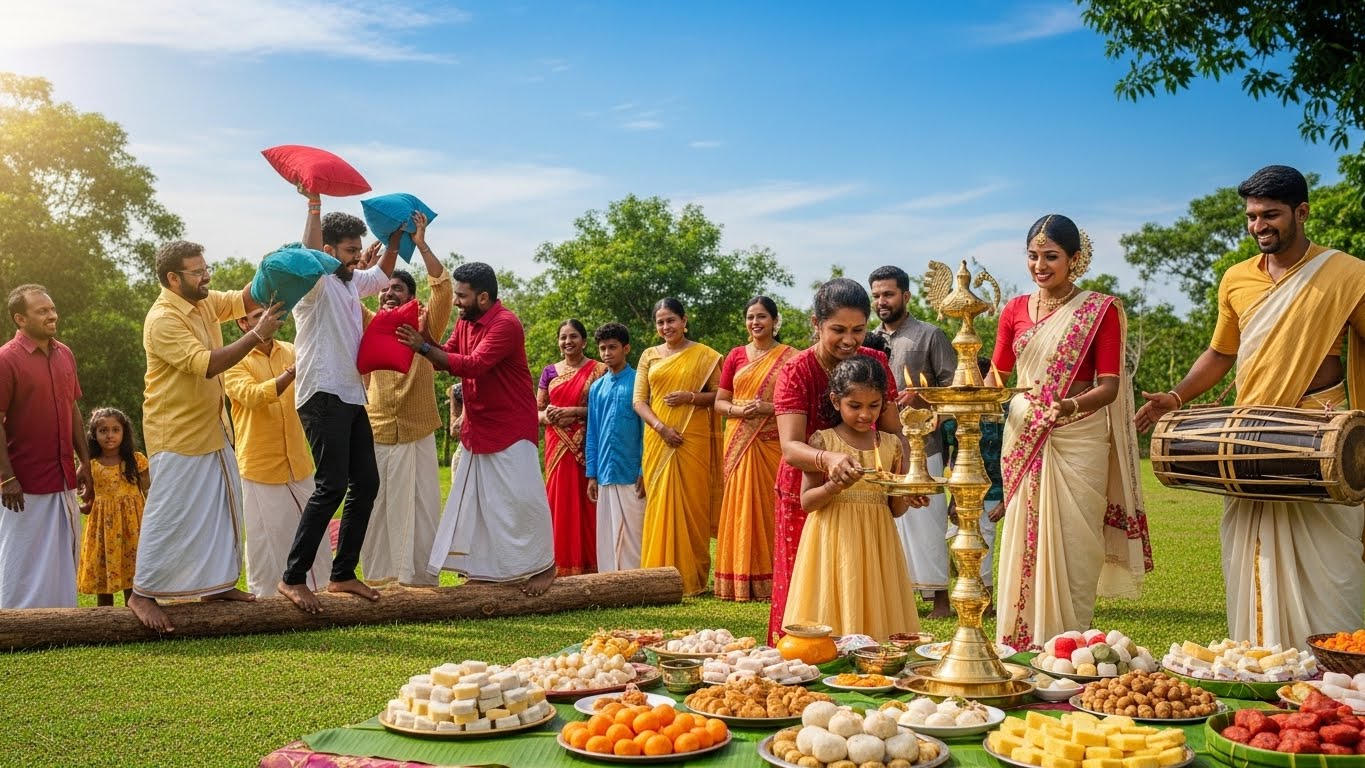

The Island's Most Important Celebration
Sinhala and Tamil New Year known as Aluth Avurudda in Sinhala and Puthandu in Tamil—marks the most significant cultural celebration in Sri Lanka, observed simultaneously by both major ethnic communities around mid-April (typically April 13-14). Unlike the Gregorian New Year in January, this traditional harvest festival celebrates the sun's transition from the Meena Rashiya (House of Pisces) to Mesha Rashiya (House of Aries), an astrological event marking the end of harvest season and beginning of new agricultural cycles. The entire country essentially shuts down for several days as people return to their ancestral villages, reunite with families, engage in traditional rituals, play ancient games, and feast on special New Year foods.
For visitors, experiencing Sinhala and Tamil New Year offers incredible insights into authentic Sri Lankan culture. You'll witness traditions practiced for centuries. Lighting the hearth at auspicious times determined by astrology, boiling milk until it overflows as a prosperity symbol, preparing special sweets like kavum and kokis, playing traditional games like pillow fighting and pot breaking, exchanging money and betel leaves as good luck gestures, and bathing in herbal water at prescribed moments. The atmosphere is joyous, noisy (firecrackers are a big part of celebrations), colorful, and deeply rooted in cultural identity. It's like experiencing Thanksgiving, New Year, and a harvest festival combined, all infused with distinctly Sri Lankan character.
Fixed Date & Public Holiday
Sinhala and Tamil New Year falls on April 13-14 each year (dates occasionally vary by a day based on astrological calculations). It's a major public holiday with banks, offices, shops closed for 3-5 days as the entire nation celebrates.
Traditional Rituals & Customs
New Year celebrations follow precise astrological timing. The period begins with "Nonagathe" - a neutral time when the old year has ended but the new hasn't begun, typically lasting 12-24 hours. During this liminal period, many families avoid cooking, working, or engaging in transactions, instead spending time in quiet contemplation, meditation, or religious observance. Once the auspicious time arrives (announced nationally and observed strictly), the New Year officially begins with the lighting of the hearth and boiling milk until it overflows the pot—the overflow symbolizing abundance and prosperity for the coming year.
Other key rituals include bathing in herbal water at the prescribed moment, wearing new clothes in auspicious colors (often white), eating the first meal of the year at the exact specified time (kiribath - milk rice - is traditional), engaging in the first business transaction by exchanging money with elders, applying herbal oil on the head, and visiting temples to receive blessings. Each activity has prescribed auspicious times determined by astrologers, and families often follow these meticulously. The attention to timing and ritual creates a structured, almost ceremonial feel to the day that contrasts sharply with the chaotic exuberance of the games and entertainment that follow.
Food plays a central role with families preparing elaborate arrays of traditional sweets and savory dishes weeks in advance. Kavum (deep-fried rice flour and treacle cakes), kokis (crispy deep-fried flower-shaped cookies), aasmi (sweet ribbon-shaped pastries), mung kavum (mung bean cakes), athirasa (rice flour and jaggery pancakes), and numerous other delicacies fill every household. The preparation and sharing of these foods strengthens family bonds and maintains culinary traditions passed through generations. For visitors fortunate enough to be invited to a family celebration, tasting authentic homemade New Year sweets provides delicious cultural immersion.
Traditional Games & Entertainment
After completing rituals, communities organize traditional New Year games (Avurudu Krida) that bring people together in friendly competition and entertainment. Pillow fighting on a greased pole suspended over water tests balance and strength as opponents try to knock each other off. Kana mutti bindeema (breaking the pot) involves blindfolded participants attempting to smash a hanging clay pot with a stick while others give misleading directions. Placing the eye on the elephant requires blindfolded players to place a sticker on the correct spot on an elephant drawing—the original pin-the-tail game.
Other popular games include tug-of-war competitions pitting different villages or age groups against each other, climbing greased poles to retrieve flags or prizes from the top, bun eating contests where participants must eat buns hanging from strings using only their mouths (no hands!), lime-and-spoon races, sack races, and various relay competitions. The games are loudly cheered by spectators, provide endless entertainment and laughter, and maintain traditions that might otherwise disappear in modern society. Watching or participating in these games offers genuine cultural engagement far beyond typical tourist experiences.
What Visitors Can Expect
Experiencing Sinhala and Tamil New Year as a visitor requires understanding that this is fundamentally a family celebration rather than a tourist event. Most businesses, restaurants, and shops close for 2-4 days as workers return to villages. Hotels remain operational with staff working on rotation, but services may be reduced. Tourist attractions might have limited hours or be closed entirely. Public transport reduces frequency as even bus and train drivers go home. The country essentially takes a collective pause, and visitors should plan accordingly.
However, this "inconvenience" offers unique opportunities. Streets are quieter, beaches less crowded, and you'll witness authentic cultural practices rather than performances staged for tourists. Many hotels organize New Year celebrations for guests featuring traditional foods, games, and entertainment, providing accessible cultural experiences. If you've befriended locals or your guesthouse hosts celebrate, you might receive invitations to join family celebrations an incredible honor and genuinely immersive cultural experience. Come with patience, flexibility, and cultural curiosity rather than expectations of normal tourist services, and you'll be rewarded with authentic insights into Sri Lankan life.
Sinhala & Tamil New Year 2027: Exact Dates & Planning Ahead
With the 2026 celebrations behind us, international travelers and locals alike are planning ahead for Sinhala and Tamil New Year 2027. In 2027, the sun transitions into Aries (Mesha Rashiya) in mid-April, marking the national celebrations on:
- Tuesday, April 13, 2027: Punya Kalaya (Nonagathe) begins — the astrologically neutral period when shops, restaurants, and public services pause for temple visits and religious preparation.
- Wednesday, April 14, 2027: National New Year Day (Aluth Avurudda & Puthandu) — families light hearths, boil festive milk pots, and celebrate the first auspicious meal together.
- April 15–16, 2027: National holiday continuation — oil anointing ceremonies (Hisa Thel Gema) and lively community festival games across villages and resort towns.
2027 Booking Advisory for Travelers: Because April coincides with the end of the dry beach season in the South and the beginning of the Easter holidays, transport and coastal stays book out rapidly. Sri Lanka Railways train tickets (Colombo–Kandy–Ella) become available 30 days prior and sell out almost instantly. We strongly recommend booking private vehicle transfers and accommodation by January 2027 if your itinerary touches the April 11–17 window.
Must-Try Avurudu Foods: A Visitor's Checklist
No Sinhala and Tamil New Year celebration is complete without indulging in traditional sweets and savory dishes. If you're visiting during April, make it a personal mission to taste as many of these as possible — most hotels serving Avurudu meals will feature at least half of this list:
🍯 Kavum: Deep-fried diamond-shaped cakes made from rice flour and treacle. The most iconic Avurudu sweet — crispy on the outside, soft inside with a rich, caramel-like flavor. Every family has their own recipe passed through generations.
🌸 Kokis: Delicate flower-shaped cookies deep-fried to golden perfection using a special mold. Light, crispy, and mildly sweet — dangerously addictive once you start eating them.
🍚 Kiribath (Milk Rice): The ceremonial first meal of the New Year. Rice cooked in thick coconut milk, cut into diamond shapes, served with lunu miris (spicy onion sambol) or jaggery. Simple but deeply symbolic.
🥜 Aasmi: Intricate ribbon-shaped rice flour pastries, deep-fried and coated in treacle syrup. These require incredible skill to make — the lattice pattern is piped through a special mold into hot oil.
🫘 Mung Kavum: Small, round cakes made from mung bean paste and jaggery, wrapped in rice flour dough and deep-fried. Richer and denser than regular kavum, with an earthy sweetness.
New Year Visit Tips
- Plan for closures: Banks, shops, restaurants closed 2-4 days; stock up on essentials beforehand
- Book accommodation early: Hotels fill with locals unable to reach villages; advance booking essential
- Transport challenges: Buses, trains run reduced schedules; hire private driver if traveling during period
- Hotel celebrations: Most hotels organize traditional games and feasts for guests
- Cultural respect: Observe quietly if witnessing family celebrations; ask before photographing
- Try traditional foods: Hotels and restaurants serve special New Year sweets and dishes
- Embrace flexibility: Plans may need adjustment; go with the flow of island celebrating
- Avoid critical travel: Don't schedule international flights on April 13-14 in case delays occur
Cultural Significance & Unity
What makes Sinhala and Tamil New Year particularly special is its role as a unifying celebration transcending ethnic divisions. While Sri Lanka's recent history includes ethnic tensions between Sinhala Buddhist and Tamil communities, the New Year remains a shared cultural touchstone observed by both groups simultaneously with similar rituals, games, and traditions. This common celebration of astrological timing, harvest thanksgiving, and family reunion demonstrates the deep cultural connections underlying surface differences. During New Year period, the emphasis falls on shared Sri Lankan identity rather than ethnic divisions.
The festival also connects urban and rural populations as city dwellers flood back to ancestral villages, temporarily reversing typical migration patterns. This annual return strengthens family bonds, ensures cultural transmission to younger generations, and maintains connections to rural roots that might otherwise fade in increasingly urbanized lives. The mass homecoming creates a national sense of renewal, reconnection, and cultural continuity that reinforces collective identity and social cohesion.
April Weather & Travel Conditions
April marks a transition period in Sri Lanka's weather patterns, which affects travel experiences during New Year period. The southwestern coastal areas may experience brief showers and variable weather as the inter-monsoon period begins, though conditions generally remain pleasant with mix of sun and clouds. The east coast enjoys excellent weather in April, making it an ideal time for beaches in Arugam Bay and Trincomalee. Hill country experiences pleasant temperatures though occasional rain showers.
Despite potential weather unpredictability, April offers the advantage of experiencing authentic culture alongside decent beach and sightseeing conditions in many areas. If timing your visit to coincide with Sinhala and Tamil New Year, build flexibility into your itinerary, have backup plans for rainy days, and embrace the cultural experience as the main attraction rather than expecting perfect beach weather. The trade-off of slightly uncertain weather for incredible cultural immersion is worthwhile for travelers seeking genuine local experiences.
Experience Authentic Sri Lankan Culture
Plan your visit around Sinhala and Tamil New Year for unforgettable cultural immersion. We arrange everything from accommodation that stays open during celebrations to cultural experiences and flexible itineraries embracing this special time.