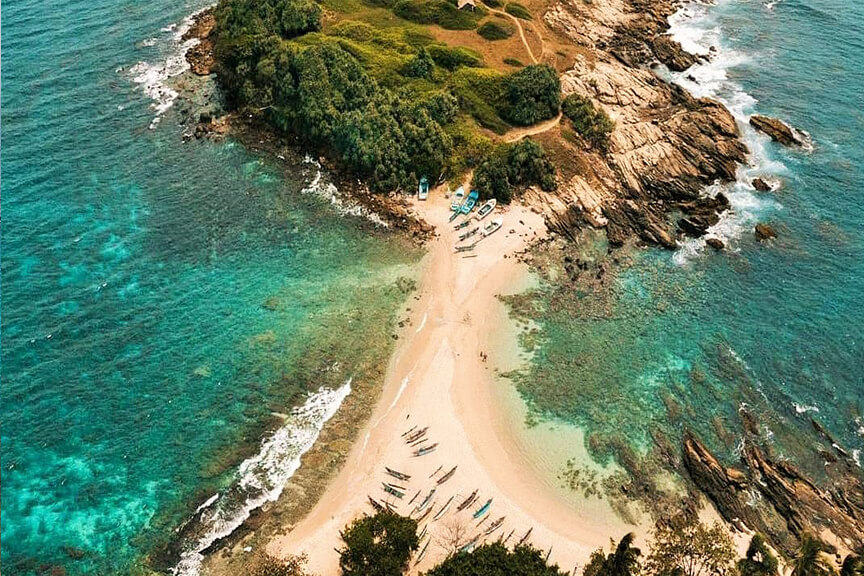

A Beach That Time Nearly Forgot
Just 12 kilometers west of Tangalle, where a small road branches off toward the ocean through coconut groves and rice paddies, lies one of southern Sri Lanka's most enchanting secrets. Nilwella Blue Beach remains blissfully unknown to most international travelers, appearing in few guidebooks and rarely mentioned in tourist forums. This obscurity is precisely what makes it special—a pristine stretch of golden sand bordered by turquoise waters so luminous they seem photoshopped, where your only companions might be a handful of local fishermen, a few Sri Lankan families on weekend outings, and the occasional traveler lucky enough to stumble upon this coastal gem.
The beach curves gently for nearly a kilometer, flanked by low rocky outcrops that create natural pools and protected swimming areas. Coconut palms lean at dramatic angles over the sand, their fronds rustling in the constant Indian Ocean breeze. The water here displays an almost supernatural clarity—shades of blue and turquoise that shift with the sun's angle, revealing sandy bottoms punctuated by coral formations and the occasional sea turtle gliding past. Unlike busier southern beaches where vendors and tour operators compete for attention, Nilwella maintains an almost meditative tranquility broken only by wave sounds and seabird calls.
What sets Nilwella apart isn't just its physical beauty but its authentic character. A small fishing village huddles at one end of the beach, where painted wooden boats rest on the sand between voyages and fishermen mend nets in the shade. A few simple guesthouses and beach cafes serve fresh seafood and cold drinks without the commercialization that has transformed other coastal areas. This is Sri Lankan beach life as it existed decades ago—unpretentious, unhurried, and utterly genuine. Visitors don't come to Nilwella for nightlife or resort amenities; they come for something increasingly rare in our connected world: the simple pleasure of a beautiful beach where you can spend entire days doing absolutely nothing except swimming, reading, and watching the horizon.
Hidden Gem Status
Nilwella Blue Beach receives a fraction of the visitors that flock to nearby Mirissa or Unawatuna, maintaining an authenticity and tranquility that's increasingly rare on Sri Lanka's southern coast. Many days, you might have entire sections of beach to yourself.
The Nilwella Beach Experience
The beach itself stretches in a gentle arc, its golden sand fine and clean, backed by a narrow strip of coconut palms and scrubby coastal vegetation. Unlike some southern beaches where currents and undertows create dangerous swimming conditions, Nilwella's protected position and gradual slope into the ocean make it generally safe for swimmers of varying abilities. The water stays shallow for quite a distance from shore, perfect for children or nervous swimmers, before gradually deepening into the vivid blue offshore waters.
Swimming conditions vary with season and tide but remain generally favorable year-round. The dry season (December-March) brings calmer seas with minimal waves, creating perfect conditions for relaxed swimming and floating. During southwest monsoon months (May-September), waves increase and currents strengthen, requiring more caution though the beach never becomes completely unswimmable. Local fishermen and guesthouse owners provide reliable information about daily conditions—always ask before swimming if conditions seem questionable.
The rocky outcrops at both ends of the beach create fascinating exploration opportunities during low tide. Tide pools form in the weathered limestone, harboring small fish, sea anemones, hermit crabs, and colorful marine life. Children delight in these natural aquariums, though adults find equal fascination watching the tiny ecosystems function. The rocks also provide excellent vantage points for photography, particularly in late afternoon when golden hour light transforms the entire scene into something worthy of a postcard.
Snorkeling opportunities exist around the rocky areas, particularly on calm days when visibility extends several meters. While not comparable to dedicated snorkeling sites with extensive coral reefs, Nilwella's near-shore waters host various tropical fish species, occasional sea turtles, and interesting rock formations. Bring your own snorkeling equipment—rental options are limited compared to more developed beaches. The best snorkeling occurs in the morning before afternoon winds stir up sediment and reduce visibility.
Things to Do at Nilwella
The primary activity at Nilwella is, appropriately, doing very little. This beach rewards those who can embrace slow travel—spending hours under a palm tree with a good book, taking leisurely swims when the heat builds, napping in the shade, and generally allowing time to pass at its own pace. The absence of water sports operators, jet skis, and organized activities might disappoint some visitors, but for others, this simplicity represents pure luxury in our overstimulated age.
Beach walks offer wonderful exploration, particularly in early morning or late afternoon when temperatures moderate. Walking west from the main beach area, you'll pass the fishing village where you can observe daily life—boats returning with catches, fishermen preparing nets, fish being cleaned and salted. Continue further and the beach becomes increasingly isolated, sometimes completely deserted for long stretches. These solitary walks, with nothing but ocean on one side and jungle-covered headlands on the other, create moments of genuine solitude increasingly rare in popular tourist destinations.
Sunrise and sunset both deserve witnessing at Nilwella. The beach faces south-southeast, meaning sunrise light illuminates the entire bay beautifully while sunset creates dramatic skies behind the coconut palms. Early risers are rewarded with fishing boats heading out to sea, their painted hulls brilliant in fresh morning light. Sunset attracts the few visitors staying nearby, though even then the beach never feels crowded—you can easily find your own stretch of sand to watch day's end.
Fresh seafood constitutes one of Nilwella's genuine pleasures. Several small beach cafes and guesthouses prepare daily catches—grilled fish, prawns, cuttlefish, and crab served with rice and vegetables. Quality varies but the freshness never disappoints, with fish literally going from ocean to plate within hours. Prices remain remarkably reasonable compared to tourist restaurants in Tangalle or Mirissa. Some establishments welcome advance orders for specific preparations—a whole fish grilled with local spices, crab curry, or prawn fried rice can be arranged if you ask in the morning.
The Fishing Village and Local Life
The small fishing community at Nilwella has existed for generations, their livelihoods tied to the ocean's rhythms and the seasonal fish migrations. Traditional outrigger canoes and small motorboats crowd the beach's western end, painted in bright blues, greens, and reds that create vivid contrasts against the golden sand. Fishermen typically head out before dawn, returning mid-morning with catches that feed both their families and local restaurants. Watching these boats navigate through the surf—timing their runs between wave sets—demonstrates skill developed over lifetimes spent reading ocean conditions.
The village maintains traditional Buddhist customs, with a small temple serving the community's spiritual needs. Respectful visitors are generally welcome to observe daily life, though remember this is a real community, not a tourist attraction. Simple courtesy goes far—greeting people with a smile and "ayubowan" (traditional greeting), asking permission before photographing individuals, and purchasing occasional snacks or drinks from village shops contributes to the local economy while fostering good relations.
Women play crucial roles in the fishing economy, handling much of the post-catch processing. You'll see them cleaning fish, preparing them for drying and salting, or heading to the main road to sell to passing buyers. The traditional gender division of labor—men fishing, women processing—continues here much as it has for centuries, though younger generations increasingly seek opportunities beyond the village's traditional economy.
Children from the village provide some of the beach's most delightful moments. After school hours, they pour onto the sand for swimming, cricket matches, and general play. Their unselfconscious enjoyment, fearlessly diving through waves that would intimidate many adult tourists, reminds visitors that this beach belongs first to the local community who've known it their entire lives. Some children may approach tourists with friendly curiosity, practicing English learned in school or simply seeking to make new friends from faraway places.
Where to Stay
Accommodation options at Nilwella remain limited and basic—precisely what maintains the area's unspoiled character. Several small guesthouses and beach cabanas operate along the main beach stretch, offering simple rooms with fans, mosquito nets, and attached bathrooms. Don't expect luxury amenities or high-speed WiFi; these establishments provide clean, functional accommodation with direct beach access and friendly hospitality. Many are family-run operations where owners personally manage all aspects of service, creating intimate atmospheres and opportunities to learn about local life.
Blue Beach Guest House, which gives the area its popular name, offers basic rooms just steps from the sand. The on-site restaurant serves reliable seafood and Sri Lankan rice and curry, making it convenient for meals without leaving the beach. Similar establishments dot the coastline, most operating on informal bases—room availability often depends on simply showing up and asking, though during peak season (December-March) advance booking via phone becomes advisable.
For those seeking slightly more comfort, several small boutique properties have opened in recent years on inland plots within walking distance of the beach. These offer better facilities—air conditioning, hot water, WiFi, and more stylish design—while still maintaining Nilwella's low-key atmosphere. Properties like these cater to travelers who appreciate the area's authenticity but prefer more comfortable sleeping arrangements after beach days.
Many visitors base themselves in Tangalle town (12 kilometers east) where accommodation options range from budget guesthouses to upscale resorts, making day trips to Nilwella for beach time. This approach offers more dining choices, evening entertainment options, and reliable services while still allowing access to Nilwella's peaceful beach during daylight hours. Tuk-tuks make the journey for 500-800 rupees, with drivers happy to wait or return at prearranged times.
Getting to Nilwella
Reaching Nilwella requires some effort—another factor in its continued obscurity. From Tangalle, head west on the main coastal road (Matara Road) for about 8 kilometers until you reach Kudawella junction. Turn south (toward the ocean) and follow the narrow road for another 3-4 kilometers through villages and paddy fields until you reach the beach. The route isn't always clearly marked, and GPS coordinates help navigate the final kilometers. Total journey time from Tangalle runs 20-30 minutes depending on traffic and your ability to follow the winding village roads.
Tuk-tuks provide the most common transport, with drivers in Tangalle familiar with Nilwella and happy to make the journey. Negotiate round-trip fares including waiting time (typically 2,000-3,000 rupees for a half-day trip) or arrange one-way transport if staying overnight at beach guesthouses. Most tuk-tuk drivers speak basic English and can provide helpful local information during the journey.
For independent travelers, renting a scooter in Tangalle offers flexibility for exploring Nilwella and the surrounding coast at your own pace. The route is straightforward once you understand it, and having your own transport allows spontaneous visits during the best light or tide conditions. Scooter rentals in Tangalle cost around 1,000-1,500 rupees daily, requiring an international driving permit and basic riding skills to navigate village roads safely.
From western coastal towns like Mirissa or Weligama, the journey covers approximately 45-50 kilometers and takes about one hour via the coastal highway. From Colombo, expect a 4-5 hour journey covering roughly 220 kilometers. Most visitors combine Nilwella with other southern attractions rather than making it a single-destination trip—the beach works perfectly as part of multi-day itineraries exploring the southern province.
When to Visit
Nilwella's southern coast location means it experiences the same seasonal patterns as Tangalle and Mirissa. The dry season (December through March) offers optimal conditions—calm seas, reliable sunshine, minimal rainfall, and comfortable temperatures. This period coincides with European winter, attracting the region's highest visitor numbers, though Nilwella remains relatively quiet even during peak season. Accommodation prices increase modestly but never reach the levels seen in more developed beach destinations.
April marks a transition month with increasing heat and occasional afternoon thunderstorms that cool the air dramatically. The beach remains beautiful and swimmable, though rougher seas may develop. This shoulder season offers advantages—lower prices, fewer visitors, and dramatic storm photography opportunities for those unconcerned about perfect weather.
The southwest monsoon (May-September) brings significant changes. Waves increase substantially, making swimming more challenging and sometimes dangerous. Rain falls more frequently, often in heavy afternoon downpours, though mornings frequently stay dry. Despite these conditions, Nilwella retains appeal for travelers seeking solitude and dramatic ocean conditions. The monsoon transforms the coastline—powerful waves crash against rocks, storm clouds create moody atmospheric conditions, and the beach takes on a wild, untamed character absent during calmer months. Accommodation and food prices drop significantly, and you might have the entire beach to yourself for hours.
October-November brings the inter-monsoon period with unpredictable weather—some gorgeous clear days mixed with rainy spells. This season offers perhaps the best balance—reasonable prices, smaller crowds, and decent swimming conditions on good days. The surrounding vegetation reaches peak lushness after monsoon rains, creating particularly vibrant landscapes.
Responsible Beach Visiting
Nilwella's pristine condition depends on visitors treating it respectfully. Unlike beaches with formal management and cleaning crews, Nilwella relies on the local community and visitors' conscientiousness to stay clean. Always remove all trash when leaving the beach—carry a small bag for collecting your waste and dispose of it properly back in Tangalle or at your accommodation. Plastic waste represents a particular concern; minimize plastic use and never leave any on the beach.
The fishing community deserves respect as well. Their boats, nets, and equipment represent significant investments and essential tools for earning livelihoods. Don't disturb fishing gear, move boats, or interfere with fishing activities. If you want to photograph fishermen at work, ask permission first—many are happy to oblige, though some may request small payments for posed photos. Purchasing fish directly from fishermen or eating at village restaurants supports the local economy meaningfully.
Marine life protection includes several important practices. Don't walk on coral formations, as this damages delicate organisms that take decades to grow. If you encounter sea turtles while swimming or snorkeling, observe from a respectful distance without chasing or touching them. Sea turtles nest occasionally on this beach—if you discover turtle tracks or nesting activity, inform local guesthouses or the nearest turtle conservation organization. Never disturb nests or hatchlings.
Consider staying at locally-owned guesthouses rather than external properties if available. Your accommodation and food spending provides direct economic benefits to the community, giving them financial reasons to maintain the beach's natural character rather than selling land for large-scale development. Even small expenditures—buying coconuts from beach vendors, hiring local tuk-tuks, eating at village restaurants—make meaningful contributions when repeated by enough visitors.
Swimming & Snorkeling Safety at Blue Beach
Blue Beach Island (Nilwella) offers some of the south coast's clearest waters, but the natural environment requires awareness. Follow these guidelines for a safe and enjoyable visit:
🟢 Safe Zones: The sheltered lagoon between the beach and the island provides the calmest swimming conditions. Waist-to-chest deep at high tide, it's ideal for families. The island's western side has a natural rock pool perfect for snorkeling in protected conditions with excellent visibility.
🟡 Moderate Caution: Swimming around the island's southern tip exposes you to ocean swells. Currents can pick up, especially on outgoing tides. Stay within your depth comfort zone and avoid swimming alone. Reef shoes are recommended — the rocky bottom has sea urchins in some areas.
🔴 Avoid: The open ocean side of the island has unpredictable currents and no lifeguard coverage. Even strong swimmers should exercise extreme caution here. During monsoon months (May–September), avoid swimming entirely on the ocean-facing side as swells wrap around the island unpredictably.
Essential Tips for Your Visit
- Bring cash: No ATMs nearby, and most places don't accept cards
- Pack essentials: Sunscreen, water, snacks—limited vendors on the beach
- Wear sun protection: Limited natural shade during midday hours
- Check swimming conditions: Ask locals about currents before entering water
- Time your visit: Early morning or late afternoon offers best light and temperatures
- Respect local customs: This is a fishing village, not a tourist resort
- Take all trash: No bins on beach—carry waste out with you
- Bring snorkel gear: Limited rental options available
Creating Your Southern Coast Itinerary
Nilwella fits perfectly into broader southern coast explorations. Many travelers follow a pattern: active sightseeing days interspersed with relaxed beach days for recovery. Visit Mulkirigala Rock Temple one morning, then spend the afternoon recovering at Nilwella. Combine Rekawa turtle watching in the evening with a Nilwella beach day, staying at coastal accommodation convenient to both. The region's compact size allows experiencing diverse attractions without extensive travel between sites.
Tangalle town itself deserves exploration—the harbor, fish market, and Buddhist temples provide cultural interest. The nearby Tangalle Lagoon offers excellent birdwatching, particularly for water birds and migratory species during the October-March season. Several small Buddhist temples dot the coast between Tangalle and Nilwella, including some with ancient history and interesting architecture.
Hiriketiya Beach, about 20 kilometers west of Nilwella, has evolved into a trendy surf and yoga destination while maintaining some charm. It offers a nice contrast—more social atmosphere, better restaurant options, and excellent surf conditions. Some travelers alternate between Nilwella's solitude and Hiriketiya's liveliness, enjoying both within the same trip.
Further west, Weligama and Mirissa provide even more developed beach experiences with numerous accommodation options, restaurants, and the famous whale watching tours operating from Mirissa harbor. A southern coast itinerary might progress from busy to quiet: start in Mirissa for whale watching and social atmosphere, move to Hiriketiya for surf, then end in Nilwella for peaceful beach days before returning to Colombo or continuing eastward to Arugam Bay.
Ready to Discover Nilwella?
Experience this hidden beach paradise with perfect turquoise waters. We'll arrange comfortable transport from Tangalle and help you find the best spots for swimming and relaxation.