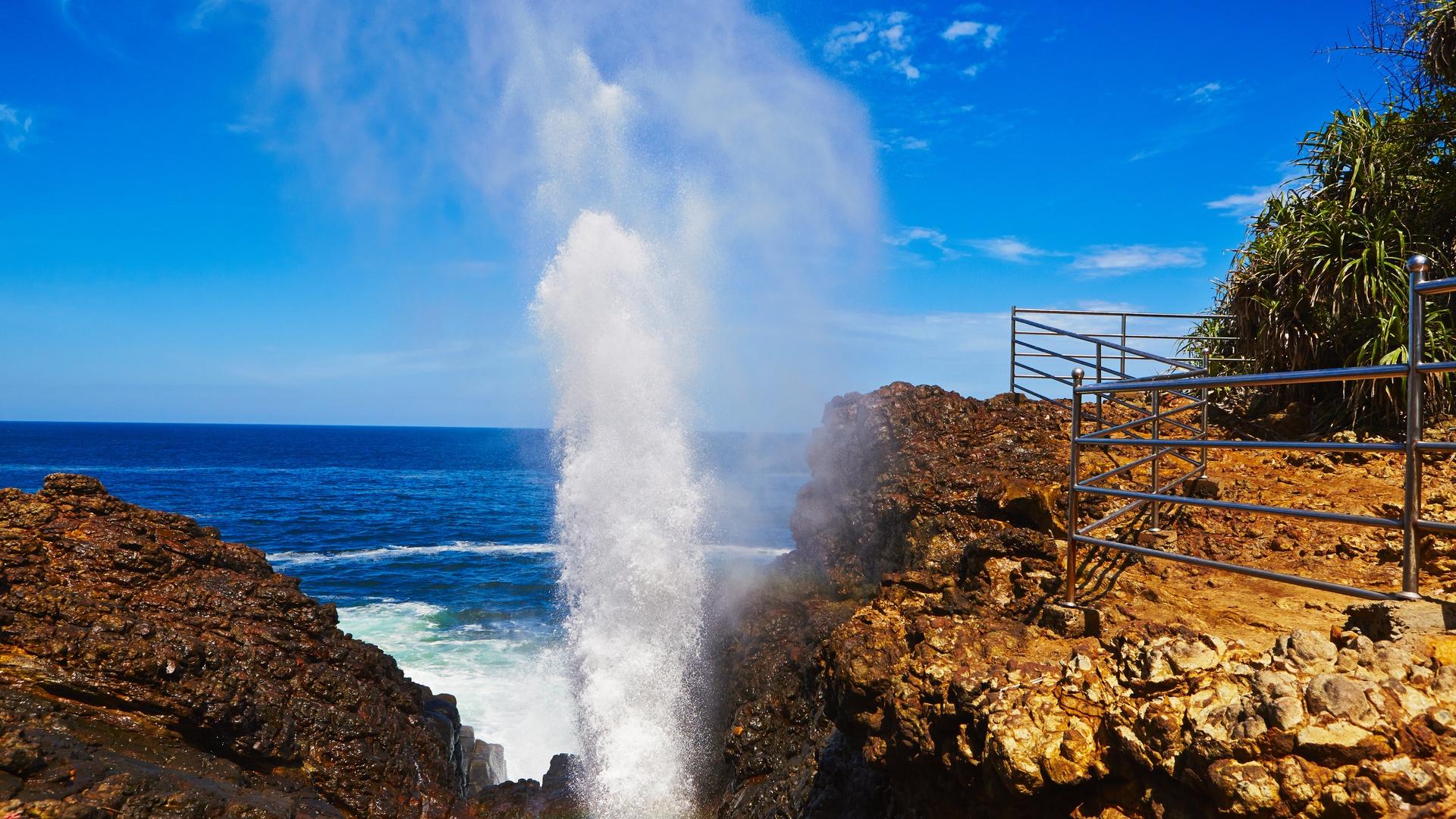

Nature's Powerful Water Fountain
Located near Dickwella (also spelled Dikwella) on Sri Lanka's southern coast, Hummanaya Blow Hole ranks as the second largest blowhole in the world. This spectacular natural phenomenon occurs when powerful ocean waves force seawater through a narrow rock crevice, shooting it high into the air in dramatic fountain-like displays. During optimal conditions—high tide combined with rough seas—water can rocket up to 25-30 meters (80-100 feet) high, creating a thunderous roar and massive spray that soaks spectators even at safe distances. It's a raw display of ocean power that leaves visitors awestruck and slightly nervous about the sea's tremendous force.
The name "Hummanaya" comes from Sinhala words meaning "howling sound," which perfectly describes the deep rumbling noise the blowhole makes as water is forced through the narrow channel. The geological formation consists of a natural cavity beneath the coastal rocks where waves enter and become compressed, building pressure until the water explodes upward through the opening. The entire coastline here is rugged and dramatic, with waves crashing against jagged rocks creating constant white spray. The blowhole represents the most spectacular manifestation of this coastal power, concentrating it into regular eruptions that occur with each strong wave cycle.
Second Largest in the World
Hummanaya is globally recognized as the world's second largest blowhole, capable of shooting water 25-30 meters high during optimal conditions. The spectacle is most impressive during high tide and rough seas.
When to Visit for Best Displays
Timing is everything when visiting Hummanaya. The blowhole performs best during high tide when waves are strongest and can push the maximum amount of water through the cavity. Check local tide tables before visiting—many hotels and guesthouses can provide this information, or search online for "Dickwella tide times." Plan to arrive about an hour before high tide peaks, as this period often provides the most consistent spectacular eruptions. During low tide, you might still see small spouts, but they lack the dramatic height and power that make Hummanaya truly impressive.
Weather and sea conditions matter equally. Rough seas produce much more spectacular blowhole activity than calm conditions, so ironically the monsoon season from May to October—when seas are rougher on the south coast—can actually offer more dramatic displays despite being "off-season" for beach activities. That said, visiting during extremely rough conditions can be dangerous due to massive waves washing over the viewing area. The best compromise is visiting during the November-April dry season on days when some swell is present but conditions aren't dangerously rough, ideally coordinating with high tide.
Early morning or late afternoon visits offer advantages beyond just tide timing. The light is better for photography during golden hours, temperatures are cooler making the walk and waiting more comfortable, and you'll typically encounter fewer crowds. The blowhole erupts throughout the day whenever conditions are right, so you don't need to visit at a specific time beyond coordinating with high tide. The shows repeat every few minutes as wave sets arrive, so even if you miss one impressive eruption, another will follow shortly—patience is rewarded with spectacular displays.
Location and How to Get There
Hummanaya Blow Hole is located in Kudawella near Dickwella, approximately 10 kilometers west of Tangalle and 12 kilometers east of Matara on the main coastal A2 highway. The site is well-signposted from the main road with clear directional signs. From either Tangalle or Matara, you can reach it easily by tuk-tuk (around 800-1,200 LKR round trip including waiting time), local bus (very cheap but less convenient), or private vehicle if you're driving along the south coast. The turnoff from the A2 leads to a small parking area near the site.
There's a small entrance fee (around 500-800 LKR for foreigners) collected at the entrance gate. The money supports site maintenance and employs local caretakers who help direct visitors and maintain safety. From the parking area, it's a short 5-minute walk along a paved path through coastal vegetation to reach the viewing platform. The path is easy and accessible for most fitness levels, though the final viewing area involves standing on rocks which can be slippery from sea spray, so wear appropriate footwear with good grip.
Many visitors combine Hummanaya with other nearby attractions as part of a day trip along the south coast. The Wevurukannala Vihara temple with its enormous Buddha statue is just a few kilometers away, and beautiful beaches like Dickwella Beach are within easy reach. If you're based in Tangalle, Mirissa, or Matara, Hummanaya makes an excellent half-day excursion, easily combined with lunch at a coastal restaurant and beach time before or after your blowhole visit.
Safety and Viewing Tips
While Hummanaya is spectacular to witness, it's crucial to respect the power of the ocean and follow safety guidelines. The designated viewing platform provides the best and safest vantage point, offering excellent views while maintaining safe distance from the most dangerous areas. During rough seas, massive waves can wash over the rocks surrounding the blowhole, and people have been injured or worse by venturing too close. Always stay behind safety barriers and heed warnings from caretakers—they know the conditions and risks intimately.
Even at the viewing platform, be prepared to get wet from spray, especially during impressive eruptions. Protect cameras and phones in waterproof bags or cases, and consider bringing a small towel. The rocks can be extremely slippery from constant sea spray and algae growth, so wear closed shoes with good grip rather than flip-flops. Children should be closely supervised and held firmly—the excitement of the spectacle can make them forget dangers, and a slip at the wrong moment could be serious.
For the best photographic results, use a fast shutter speed to freeze the water in mid-air, or experiment with slower speeds to show the motion blur of the eruption. Protect your camera from spray with a rain cover or plastic bag with a hole for the lens. The unpredictability of the eruptions makes photography challenging but rewarding—you'll need quick reflexes to capture the peak moment. Video can be easier than still photography for capturing the full spectacle, and the sound of the eruption adds drama that photos can't convey.
Viewing Conditions: When the Blow Hole Performs Best
Hummanaya's spectacle depends entirely on natural conditions — on perfect days, water shoots 25+ meters into the air. On flat days, it barely trickles. Here's how to time your visit for maximum impact:
🌊 Best Conditions (June–September): Southwest monsoon drives powerful swells directly into the blow hole's underwater cave system. This is when Hummanaya truly earns its reputation, with consistent eruptions reaching 15–25 meters. The spray creates rainbows in the morning light — arrive before 10 AM for this phenomenon.
🌊 Good Conditions (October–November, April–May): Transitional months with moderate swells. Eruptions typically reach 8–15 meters. Less spectacular than peak season but still impressive and enjoyable. Fewer visitors mean better viewing positions at the observation platform.
🌊 Weak Conditions (December–March): Calm seas and small swells mean the blow hole may produce only modest 2–5 meter sprays or barely activate at all. Check with your hotel or a local before making the trip. However, the coastal scenery and surrounding rock formations remain worth visiting regardless.
Essential Visiting Tips
- Check tide times: High tide is essential for impressive displays; plan arrival 1 hour before peak
- Bring waterproof protection: Spray will soak you and your gear; protect electronics
- Wear appropriate shoes: Closed shoes with grip essential; rocks are slippery and sharp
- Respect safety barriers: Stay in designated areas; ocean is dangerous and unpredictable
- Be patient: Best eruptions come in sets; wait 20-30 minutes for optimal displays
- Visit during swell: Calm seas produce weak eruptions; some wave action needed for drama
- Supervise children: Hold them firmly; slippery rocks and powerful waves are dangerous
- Best photography: Use fast shutter speeds; protect camera from spray; shoot in burst mode
What to Expect During Your Visit
A typical visit to Hummanaya lasts 30-60 minutes depending on how long you want to observe the eruptions and ocean conditions. After paying entrance and walking to the viewing area, you'll position yourself on the rocky platform with clear views of the blowhole opening. The eruptions don't occur constantly—instead, they follow the rhythm of ocean wave sets. You might wait several minutes seeing only small spouts, then suddenly a set of larger waves arrives and triggers spectacular eruptions one after another, each more impressive than the last.
The sound is as impressive as the visual spectacle. Each eruption produces a deep whooshing roar as pressurized water rockets upward, followed by the crash of falling water hitting rocks and the hiss of spray drifting in the wind. During the most powerful eruptions, you'll feel the ground vibrate slightly from the force, and the spray carried by wind can reach you even 20-30 meters away from the opening. The entire sensory experience—sight, sound, the feel of spray on your skin, the smell of salt air—creates lasting memories.
Local vendors near the entrance typically sell fresh coconuts, snacks, and basic refreshments. There are also small souvenir stalls selling handicrafts, though prices can be higher than elsewhere due to the tourist location. The entire area is quite small and focused specifically on the blowhole, without significant additional facilities or attractions on-site. The experience is concentrated but powerful—it doesn't require hours to appreciate, but the impact of witnessing nature's raw power at Hummanaya stays with you long after leaving.
Explore South Coast Wonders
Visit Hummanaya Blow Hole as part of a customized south coast tour. We'll time your visit for optimal tides and combine it with beaches, temples, and other attractions for the perfect day out.