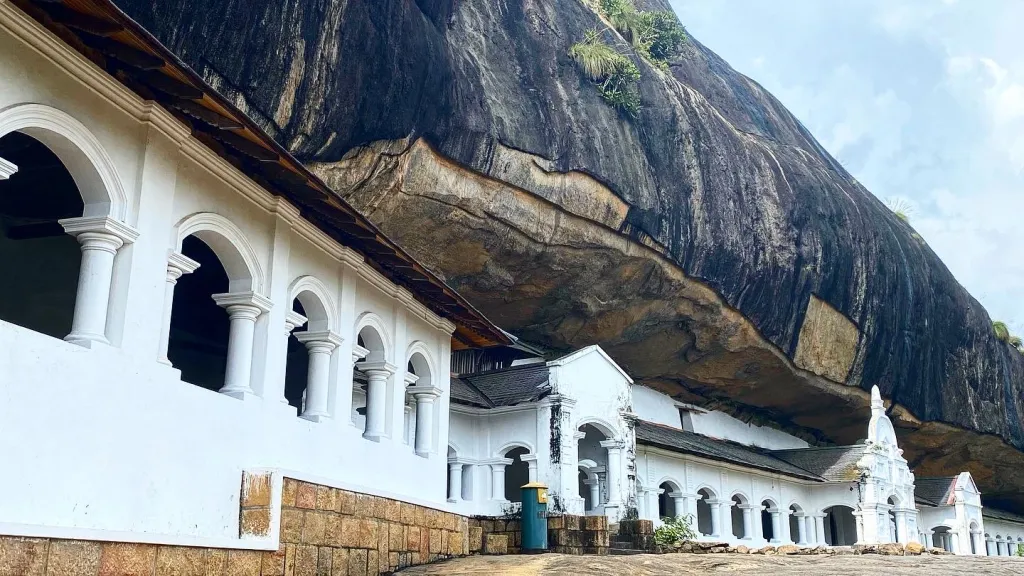

A Vertical Journey Through Buddhist History
Rising 205 meters from the flat southern plains like a geological exclamation mark, Mulkirigala Rock stands as one of southern Sri Lanka's most impressive yet undervisited spiritual sites. This massive outcrop of ancient stone has housed Buddhist monks continuously for over 2,000 years, its natural caves transformed through centuries into elaborate temple complexes adorned with stunning frescoes, massive Buddha statues, and intricate carvings. Unlike the famous Sigiriya or Dambulla cave temples in the north, Mulkirigala remains blissfully free of tourist crowds, offering an authentic pilgrimage experience where the reverent silence is broken only by chanting monks and the rustle of prayer flags in the tropical breeze.
The temple complex—formally known as Mulkirigala Raja Maha Vihara—ascends through five terraced levels connected by steep stone staircases carved directly into the rock face. Each level contains cave temples sheltering sacred Buddha images, some dating back over 2,000 years to the pre-Christian era. The journey from base to summit covers 533 steps (though who's counting?) and climbs through increasingly ancient layers of Sri Lankan Buddhist art and architecture. This vertical pilgrimage rewards those who make the ascent with not only spiritual insight but spectacular panoramic views extending across the southern province to the distant shimmer of the Indian Ocean.
Located just 16 kilometers northwest of Tangalle, Mulkirigala sits perfectly positioned for day trips from the southern coast. The site receives a fraction of the visitors that flock to more famous temples, meaning you'll often share the cave temples with only a handful of pilgrims and the resident monks who maintain this sacred space. This lack of commercialization preserves an authenticity increasingly rare at Sri Lanka's major attractions—no aggressive souvenir sellers, no crowds jostling for photos, just stone, faith, and history layered across two millennia.
Historical Significance
In 1826, British colonial officer George Turnour discovered ancient Pali manuscripts at Mulkirigala that helped scholars decode the Mahavamsa—Sri Lanka's great historical chronicle. This discovery revolutionized understanding of early Buddhist history and Sri Lankan civilization.
Ascending Through the Five Terraces
The climb begins at the First Terrace (Pahala Vehera), reached after an initial flight of whitewashed steps that sets your legs burning and your heart pumping. This lowest level serves as an introduction, housing a small image house and a dagoba (Buddhist stupa) that hints at the grander structures awaiting above. The terrace offers a pleasant rest stop where you can catch your breath while appreciating the first glimpses of the rock's dramatic architecture—natural caves expanded and enhanced by human hands over countless generations.
Continuing upward, the Second Terrace (Bovatana Vehera) presents more substantial temple structures. Here you'll find cave temples with walls covered in traditional Kandyan-era frescoes depicting scenes from the Buddha's life and Jataka tales—stories of the Buddha's previous incarnations. The paintings, executed in earth tones of ochre, red, and burnt sienna, display the distinctive Sri Lankan artistic style that evolved over centuries. Some frescoes show their age with fading and flaking, but this weathering somehow enhances their sacred character, reminding visitors of the countless pilgrims who've gazed upon these same images across centuries.
The Third Terrace (Maha Vehera) marks the temple's spiritual heart, featuring the most impressive cave temples and the largest Buddha statues. A magnificent reclining Buddha stretches 15 meters through one cave, carved from solid rock and representing the Buddha's final moments before entering parinirvana—the ultimate liberation from the cycle of rebirth. The serene expression on the Buddha's face, unchanged for centuries, inspires contemplation in even the most hurried visitor. Adjacent caves house seated and standing Buddha images, each carved with the characteristic Sri Lankan features—curled hair, elongated earlobes, and the gentle smile suggesting transcendent wisdom.
The Fourth Terrace (Uda Vehera) continues the ascent with smaller but no less beautiful cave shrines. By this level, you're breathing hard but energized by the journey itself, understanding how the physical challenge mirrors the spiritual effort required for enlightenment. Ancient monks understood this connection between bodily discipline and mental clarity—the climb itself becomes a form of moving meditation, each step a conscious act bringing you closer to the summit's revelations.
Finally, the Fifth Terrace (Rajatha Giri Len Vehera) crowns the rock at 205 meters elevation. A small dagoba marks this highest point, but the real reward is the view. On clear days, you can see for dozens of kilometers across the southern plains—patchwork rice paddies, coconut groves, distant village temples, and on the horizon, the blue line where land meets the Indian Ocean. Standing here where monks have stood for 2,000 years, watching the same landscape (if considerably more developed now), creates a powerful temporal connection—the same rock, the same faith, the same human search for meaning bridging centuries.
Artistic Treasures and Sacred Spaces
Mulkirigala's cave temples showcase multiple periods of Sri Lankan Buddhist art, creating a visual timeline of stylistic evolution. The oldest sculptures date to the 1st century BCE, when Buddhism first took firm root in Sri Lanka following the arrival of Mahinda, son of the Indian Emperor Ashoka. These early works display simplicity and restraint, focusing on the Buddha's serene presence rather than elaborate decoration.
Later additions from the Kandyan period (15th-19th centuries) brought vibrant frescoes covering cave walls and ceilings. These paintings depict the Buddha's life story—his birth as Prince Siddhartha, his renunciation of royal life, his enlightenment under the Bodhi tree, and his teaching career spanning 45 years. The Kandyan artists used natural pigments mixed with tree resins to create colors that have survived centuries despite tropical humidity and monsoon rains. Scenes burst with life: celestial beings fly through painted skies, demons flee from the Buddha's wisdom, and crowds of disciples listen raptly to his teachings.
The Jataka tale frescoes prove particularly engaging, illustrating stories of the Buddha's previous lives as a bodhisattva (enlightenment-bound being). One popular tale depicts the Buddha's incarnation as a noble prince who sacrificed himself to feed a starving tigress and her cubs—a story emphasizing compassion and selflessness that resonates across cultures. These narrative paintings served educational purposes when most people couldn't read, teaching Buddhist ethics and philosophy through vivid visual storytelling.
The dagoba (stupa) at each terrace level represents the earliest form of Buddhist architecture, originally constructed to house relics of the Buddha or enlightened monks. These hemispherical structures symbolize the Buddha's presence and serve as focal points for meditation and circumambulation—walking clockwise around the dagoba while contemplating Buddhist teachings. The practice continues today, with pilgrims performing this ritual walk while reciting sutras or silently meditating.
Living History and Royal Patronage
Chronicles suggest Buddhist monks first occupied Mulkirigala's caves as early as the 3rd century BCE, making this among Sri Lanka's oldest continuously inhabited religious sites. The rock's natural caves provided perfect shelter for ascetic monks practicing meditation in isolated mountain retreats—a tradition maintained even today by the handful of monks residing permanently at the temple.
Various Sri Lankan kings enhanced the temple complex over centuries. King Saddhatissa (137-119 BCE) reportedly first constructed formal temple buildings, recognizing the site's spiritual significance. Later rulers added additional cave temples, commissioned frescoes and sculptures, and endowed the monastery with lands providing income for maintenance and monk support. During the Kandyan kingdom period (15th-19th centuries), Mulkirigala received particular royal favor, resulting in the elaborate frescoes and statuary visible today.
The temple's most famous historical moment came in 1826 when British civil servant George Turnour discovered palm-leaf manuscripts containing portions of the Mahavamsa—Sri Lanka's great chronicle documenting the island's history from the 6th century BCE. These manuscripts, preserved by generations of monks, provided scholars the key to understanding Sri Lanka's ancient history and the spread of Theravada Buddhism. Turnour's translations revolutionized historical scholarship and elevated Mulkirigala's importance beyond its regional significance.
During colonial times, the temple fell into some disrepair as traditional patronage systems collapsed. The 20th century brought restoration efforts supported by the Sri Lankan Department of Archaeology and Buddhist organizations. Recent decades have seen careful conservation of frescoes, structural reinforcement of cave temples, and improved visitor facilities—all while maintaining the site's sacred character and active religious function.
The Pilgrimage Experience
Visiting Mulkirigala involves more than sightseeing—it's participating in an active pilgrimage site where local Buddhists come to worship, make offerings, and meditate. Understanding proper etiquette ensures respectful engagement with this sacred space while enriching your own experience. As with all Buddhist temples in Sri Lanka, visitors must remove shoes before ascending (leave them at the designated shelter near the entrance), and dress modestly covering shoulders and knees.
The climb takes 30-45 minutes for reasonably fit visitors, moving at a contemplative pace with stops to explore each terrace's temples. Don't rush—part of the experience involves adjusting your rhythm to match the site's spiritual atmosphere. Benches at each level provide rest spots and shade from the tropical sun. Carry water (vendors sell drinks near the entrance), as the climb generates significant thirst, especially in midday heat.
Early morning visits (7:00-9:00 AM) offer the most rewarding experience—cooler temperatures make the climb comfortable, morning light beautifully illuminates the frescoes, and you'll often have terraces entirely to yourself. Late afternoon (4:00-6:00 PM) provides another excellent window, with softer light creating magical photography conditions and the heat less oppressive. Midday visits are possible but hot—the whitewashed steps reflect intense tropical sun, and the rock radiates stored heat.
Photography is generally permitted throughout the complex except where specifically prohibited. Be respectful when photographing Buddha images—never pose with your back to a Buddha statue or in positions suggesting disrespect. If monks are meditating or conducting ceremonies, maintain quiet and avoid intrusive photography. Flash photography often damages ancient frescoes, so use natural light when possible.
Consider making a small donation in the contribution boxes at various terraces. These funds support temple maintenance, monk support, and conservation efforts. Even modest contributions help preserve this remarkable site for future generations. You can also offer flowers at shrines if you wish to participate more directly in worship practices—vendors near the entrance sell lotus flowers and jasmine specifically for temple offerings.
Getting to Mulkirigala
Mulkirigala sits 16 kilometers inland from Tangalle, making it an easy half-day excursion from southern beach towns. From Tangalle, the journey takes approximately 30 minutes by car or tuk-tuk via the Beliatta road. The route passes through rural villages and rice paddies, offering glimpses of everyday Sri Lankan life away from tourist zones. Most Tangalle hotels and guesthouses can arrange tuk-tuks for about 2,000-3,000 rupees round trip including waiting time, or you can hire private cars for more comfort.
Public buses run from Tangalle to Beliatta, passing the Mulkirigala junction where you can catch a connecting tuk-tuk for the final 2 kilometers to the temple base. This economical option costs just a few hundred rupees total but requires more time and coordination. Buses run frequently throughout the day, though services reduce after 5:00 PM.
From Mirissa or Weligama (approximately 40 kilometers west), the drive takes about one hour via the southern coast highway. Many visitors combine Mulkirigala with beach days, departing early for morning temple visits before returning for afternoon swimming. From Galle, the journey covers roughly 90 kilometers and takes 2-2.5 hours, making it feasible as a long day trip though most travelers base themselves closer to the site.
The entrance fee for foreign visitors is modest (typically 500 rupees, though verify current rates), collected at the base ticket office. This contributes to temple maintenance and conservation efforts. Facilities at the base include clean restrooms, a small shop selling drinks and snacks, and shaded areas for relaxing before or after your climb.
Combining with Other Southern Attractions
Mulkirigala pairs perfectly with other southern Sri Lanka experiences, creating full-day itineraries that blend culture, nature, and relaxation. Many visitors combine the temple with Rekawa turtle watching—visit Mulkirigala in late afternoon, return to the coast for dinner, then head to Rekawa Beach for evening turtle tours. This combination offers spiritual, historical, and wildlife experiences in a single memorable day.
The Wewurukannala Vihara near Dickwella, 15 kilometers southwest of Mulkirigala, features one of Sri Lanka's tallest Buddha statues at 50 meters high. While more commercialized and less atmospheric than Mulkirigala, it offers an interesting contrast in Buddhist temple styles. The two sites can be visited together in a half-day temple circuit.
Handunugoda Tea Estate, located between Tangalle and Mulkirigala, produces rare white virgin tea using unique processing methods. Tours explain this specialized tea production and include tastings. The estate's lush gardens and colonial-era bungalow create a pleasant mid-day stop when combined with temple visits.
For nature enthusiasts, Kalametiya Bird Sanctuary sits just 12 kilometers from Mulkirigala. This coastal wetland attracts migratory waterbirds and resident species, making it excellent for birdwatching, especially during the October-March season when northern migrants arrive. A morning at the sanctuary followed by afternoon temple climbing creates a balanced culture-and-nature itinerary.
When to Visit
Mulkirigala welcomes visitors year-round, though certain times offer better experiences. The dry season (December-March) provides the most reliable weather with minimal rainfall and comfortable temperatures. This period coincides with peak tourist season along the southern coast, though Mulkirigala remains relatively uncrowded even then. Clear skies ensure the best summit views and comfortable climbing conditions.
Vesak Poya (full moon in May) celebrates the Buddha's birth, enlightenment, and passing—the most important Buddhist holiday. Mulkirigala attracts significant numbers of local pilgrims during this festival, with special ceremonies, decorations, and offerings. Visiting during Vesak provides unique cultural immersion but expect crowds and extended time for your visit. Other poya (full moon) days throughout the year also see increased local visitor numbers as devout Buddhists make temple pilgrimages.
The monsoon season (May-September) brings afternoon showers but shouldn't deter visits. Morning hours often remain dry, and the post-rain atmosphere creates dramatic photography conditions with mist clinging to valleys and freshly washed greenery glowing intense emerald. Just bring rain gear and remain flexible—if storms approach, wait them out at terrace shelters rather than attempting the exposed steps during heavy rain.
Weekdays generally offer quieter experiences than weekends when Sri Lankan families make temple trips. Monks maintain more regular meditation and ceremony schedules on weekdays, potentially allowing you to witness authentic religious practices. However, weekend visits let you observe local Buddhist devotion more directly as families come to worship—both scenarios offer value depending on your interests.
Climbing Mulkirigala: What to Expect at Each Level
Mulkirigala's five cave temple terraces are carved into a 210-meter granite rock, accessed by roughly 530 ancient stone steps. Here's what awaits at each level to help you pace your climb:
Level 1 – Pahala Viharaya (5 min, Easy): The first terrace features a reclining Buddha and vivid wall paintings depicting Jataka tales. This is the most accessible level and gives a good preview of what's above. Rest benches available.
Level 2 – Uda Viharaya (10 min, Easy–Moderate): A larger cave with a seated Buddha flanked by standing figures. The Kandyan-era ceiling paintings here are among Mulkirigala's best preserved. The staircase narrows and steepens from this point.
Level 3 – Naga Viharaya (15 min, Moderate): Named for the cobra hood carvings above the cave entrance. Houses ancient ola-leaf manuscripts that were crucial in deciphering the Pali canon. Panoramic views of the surrounding coconut plantations begin opening up.
Level 4 – Deva Viharaya (20 min, Moderate–Steep): The steepest section. A small cave with delicate wall paintings and a meditation space used by monks. The ancient stone steps here are uneven — take care and use the handrail.
Level 5 – Summit Dagoba (25 min, Steep): The pinnacle features a small white stupa and 360° views stretching to the ocean on clear days. The effort is absolutely worth it. Bring water — there's no shade on the final approach.
Essential Tips for Your Visit
- Remove shoes: Leave footwear at the designated area before ascending
- Dress modestly: Cover shoulders and knees; bring shawls if needed
- Start early: Morning visits offer cooler temperatures and better light
- Bring water: The climb is strenuous in tropical heat
- Allow 2-3 hours: Time for climbing, exploring, and resting at each level
- Respect religious practices: This is an active worship site, not just attraction
- Watch for monkeys: Keep bags closed and food secured
- Support conservation: Make small donations to help maintain this ancient site
A Living Tradition
What makes Mulkirigala special isn't just its age or artistic merit but its continued role as an active religious center. Unlike many historical sites that function primarily as museums, Mulkirigala remains home to Buddhist monks who maintain daily devotional practices, meditation schedules, and study traditions extending back over two millennia. The cave temples aren't preserved artifacts but living spaces of worship where candles flicker before Buddha images, incense smoke drifts through ancient halls, and the same chants echo off stone walls that have heard them for generations.
Local Buddhist communities maintain strong connections to Mulkirigala, returning for important poya days, seeking blessings before major life events, and bringing children to learn about their religious heritage. This ongoing relationship ensures the site's preservation through community investment rather than just government conservation efforts. When you visit respectfully and contribute to its maintenance, you participate in this centuries-old tradition of lay support for Buddhist monasticism.
The temple also serves educational functions, with young monks studying Buddhism, Pali language, and traditional arts under senior monks' guidance. Some come from distant villages, continuing the ancient practice of monastic education that preserved Sri Lankan learning through centuries of political turmoil. Observing these young monks in their saffron robes, studying texts in cave temples carved by their distant predecessors, creates profound appreciation for tradition's continuity amid our rapidly changing world.
Ready to Explore Mulkirigala?
Experience this ancient rock temple's spiritual atmosphere and stunning views. We'll arrange comfortable transport from Tangalle and guide you through its sacred history.