
Ella's Most Iconic Attraction
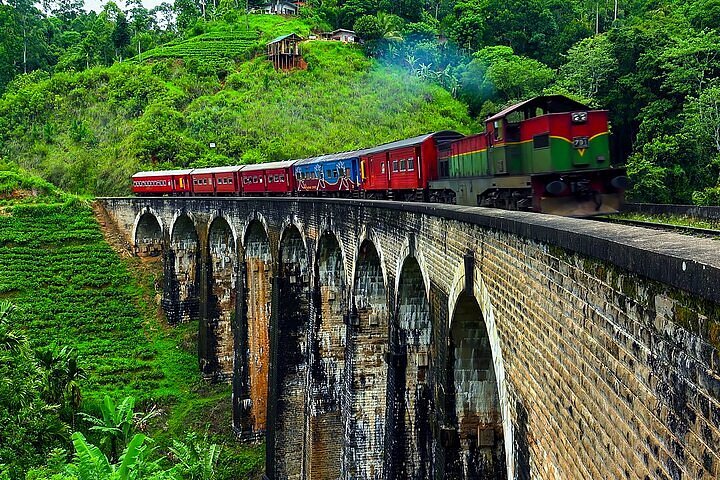
If there's one image that defines Ella, it's the Nine Arch Bridge—a majestic stone viaduct curving gracefully through lush jungle, with a blue-and-yellow train crossing its arches as misty mountains form the backdrop. This 91-meter-long colonial-era railway bridge has become Sri Lanka's most photographed landmark, appearing on countless Instagram feeds, travel blogs, and postcards. But beyond its photogenic appeal, the bridge represents a fascinating piece of engineering history and offers visitors a magical experience that combines natural beauty, colonial heritage, and the simple joy of watching trains pass through stunning scenery.
Built in 1921 during British colonial rule, the Nine Arch Bridge (also known as the "Bridge in the Sky" or Demodara Bridge) is remarkable for being constructed entirely from stone bricks and cement, without any steel—a testament to the craftsmanship of that era. Located about 2 kilometers from Ella town, the bridge sits in a natural bowl surrounded by dense jungle and tea plantations, creating a protected microclimate where mist often swirls dramatically around the arches. Whether you watch a train thunder across while standing on the tracks, hike through tea estates to reach it, or simply sit in the valley below admiring its elegant curves, the Nine Arch Bridge delivers an experience that justifies all the hype.
Train Times (Approximate)
Trains typically pass around 6:30am, 9:30am, 12:00pm, 3:00pm, and 6:15pm, though times vary and delays are common. Always check current schedules locally or arrive early and wait—the show is worth it!
How to Get to Nine Arch Bridge
There are several routes to reach the bridge, each offering different experiences. The most popular and scenic approach is walking through the tea plantations from Ella town, which takes about 30-40 minutes. From the main street, head toward Halpe Road and follow signs through tea estates, passing workers picking leaves and enjoying spectacular mountain views. This route is relatively flat and easy, though it can get muddy after rain, so wear appropriate footwear. Many cafes along the way offer directions, and locals are generally helpful if you get confused.
Alternatively, you can walk along the railway tracks from Ella station, which takes about 25-30 minutes. This is the most direct route and allows you to experience walking the actual railway line (done safely when no trains are scheduled). The track walk offers unique perspectives and photo opportunities, passing through tunnels and along embankments with views over the valleys. However, always be extremely cautious of train times, listen for approaching trains, and move completely off the tracks when one comes—while trains are slow and loud, railway accidents do happen, so safety must be paramount.
For those less inclined to walk, tuk-tuks from Ella town charge around 500-800 LKR for a round trip including waiting time while you explore the bridge. They can drop you at either the top viewpoint or bottom valley access point. Some tuk-tuk drivers will try to convince you that walking is too difficult or dangerous and insist on driving—this is usually just sales tactics, as the walk is perfectly manageable for most fitness levels. However, if you're short on time, have mobility issues, or traveling with small children, the tuk-tuk option makes perfect sense.
Best Viewing Spots & Photography
The most iconic photo angle is from below the bridge in the valley, looking up as the train crosses with jungle framing both sides. To get this shot, descend the steep path on the Demodara side of the bridge down to the valley floor. This viewpoint offers the classic postcard perspective with the full bridge arc visible and the train centered perfectly in the composition. The downside is it gets crowded, especially when trains are due, with dozens of photographers jostling for position. Arrive 20-30 minutes before scheduled train times to secure a good spot.
Walking on the bridge itself provides a completely different experience—you can stand on the tracks (safely, when no train is coming) and feel the massive stone structure beneath you while looking out over the jungle canopy. Many visitors sit on the bridge edge with legs dangling over (carefully), creating dramatic photos with the valley far below. When a train approaches, most people move to the sides but some adventurous souls stand very close to the tracks for that thrilling close-up experience of the train passing just meters away—though this requires good awareness and quick movement to stay safe.
For a less crowded perspective, hike up the hill on the Ella side to viewpoints above the bridge. These elevated positions offer stunning aerial views of the entire viaduct curving through the jungle bowl, particularly beautiful in morning light when mist fills the valley. The "secret viewpoint" (locally known) accessed via a small trail off the main path provides perhaps the most dramatic angle of all, though it requires some scrambling and isn't well signposted. Ask locals for directions or hire a guide who knows these spots.
When Do Trains Pass?
Train times at Nine Arch Bridge are approximate and subject to frequent delays, so timing your visit requires patience and flexibility. The typical daily trains pass around 6:30am, 9:30am, 12:00pm, 3:00pm, and 6:15pm, though these times vary significantly depending on delays accumulated along the route. The morning trains (6:30am and 9:30am) offer the best light for photography with soft golden sunshine illuminating the bridge and mist often creating atmospheric conditions. The afternoon trains can also be beautiful, though the light is harsher at midday.
To catch a train, ask locals, hotel staff, or cafe workers near the bridge for updated timings—they track the schedules closely and can give you reliable information about when the next train is expected. Many visitors arrive at the bridge and simply wait, using the time to explore different viewpoints, enjoy the jungle sounds, watch other tourists' excitement, or grab drinks from vendors who set up near the popular spots. The anticipation building as the train's whistle echoes through the valley is part of the experience—when it finally rounds the bend and crosses the bridge, everyone erupts in cheers and camera clicks.
If you miss the train or it's significantly delayed, don't despair—the bridge itself is beautiful even without a train crossing. Many visitors actually prefer the quieter moments before and after trains when you can explore the structure, walk across it peacefully, and appreciate the engineering and setting without crowds. That said, seeing a train cross is undeniably the highlight, so if you have time, plan to visit during at least one scheduled train crossing, arriving 30 minutes early to secure your preferred viewing spot and soak in the atmosphere.
Photography Tips: Capturing the Perfect Nine Arch Bridge Shot
The Nine Arch Bridge is Sri Lanka's most photographed landmark. Whether you're shooting on a phone or a DSLR, these tips will help you get the iconic shot:
📍 Best Viewpoints: The tea plantation hillside to the east offers the classic elevated angle showing all nine arches. Access via the small trail from the lower parking area (5-minute walk). For a unique perspective, the track level near the southern tunnel entrance captures the bridge with the train head-on.
🕐 Train Schedule for Photos: Trains cross approximately at 6:45 AM, 9:25 AM, 11:00 AM, 2:30 PM, and 4:15 PM (times vary ±15 minutes). The 9:25 AM and 4:15 PM crossings offer the best light. Arrive at least 30 minutes before the train for your composition setup.
☀️ Lighting Tips: Morning light (7–9 AM) illuminates the bridge's eastern face in warm gold. Afternoon light (3–5 PM) creates dramatic shadows through the arches. Overcast days eliminate harsh shadows and provide even, soft light — surprisingly excellent for detail shots.
📱 Phone Photography: Use portrait mode from the hillside viewpoint to blur the background foliage. Switch to ultra-wide for showing the bridge in its full landscape context. Burst mode is essential for train crossing moments — you get roughly 8–10 seconds as the train crosses.
Essential Tips for Visiting
- Best time of day: Early morning (6-9am) for soft light, fewer crowds, and mystical mist; avoid harsh midday sun
- Wear proper shoes: Trails can be muddy and slippery; avoid flip-flops, wear closed shoes with grip
- Bring water: No facilities at the bridge; carry water especially if hiking in hot weather
- Be patient: Trains are often delayed 30-60+ minutes; arrive early and embrace the waiting
- Railway safety: Trains approach quietly; always listen for whistles and stay completely off tracks when they pass
- Respect the structure: Don't climb on the arches or damage the stonework; preserve it for future visitors
- Peak season crowds: December-March sees huge crowds; visit very early or late to avoid worst congestion
- Download maps: Cellular signal can be weak; download offline maps or ask for directions beforehand
History & Engineering Marvel
The Nine Arch Bridge was constructed between 1913-1921 as part of the Badulla-Colombo railway line extension. Legend has it that the original design called for steel, but World War I made steel scarce and expensive, forcing engineers to redesign using locally available materials—stone and cement. The result was this beautiful arch bridge that has stood for over a century, still carrying trains daily without any structural issues. The name "Nine Arch Bridge" is slightly misleading as most count only eight visible arches, though some architectural historians suggest the ninth arch refers to a culvert or support structure not immediately visible.
The bridge stands 24.5 meters high (80 feet) and spans 91 meters (300 feet), curving gracefully to follow the natural contours of the valley. Its construction required enormous manual labor, with local workers hand-cutting and placing thousands of stone blocks, creating the cement mixture on-site, and building wooden scaffolding to support construction. The precision achieved without modern equipment is remarkable—the curves are perfect, the arches symmetrical, and the structure has weathered a century of monsoons, earthquakes, and constant train traffic without significant deterioration.
Today, the bridge is not just a tourist attraction but a vital working piece of Sri Lanka Railways infrastructure, carrying several trains daily between Colombo, Kandy, and Badulla. This dual identity—functioning railway and tourist landmark—creates the unique dynamic where visitors must share the space with an active rail line, adding both excitement and requiring awareness of safety considerations. There have been discussions about UNESCO World Heritage nomination for the entire hill country railway, which would include the Nine Arch Bridge as one of its most significant structures.
Combining Your Visit with Other Ella Activities
The Nine Arch Bridge visit combines perfectly with other Ella attractions to create a full day of exploration. Many visitors hike to the bridge early morning, then continue to Little Adam's Peak (another 1-1.5 hours hike from the bridge), catching sunrise views over the mountains. This combination makes for an excellent morning adventure, returning to Ella town by mid-morning for a hearty breakfast at one of the many cafes. Alternatively, visit the bridge late afternoon on your way to Ella Rock or Ravana Falls, as all these attractions lie in similar directions from town.
Several guesthouses and cafes near the bridge offer accommodation with rooms overlooking the structure, allowing you to wake up to train crossings and enjoy the bridge at different times of day without having to walk each time. Places like 98 Acres Resort, Nine Arch View Guest House, and various homestays provide these viewpoints, often with terraces where you can sit with coffee and watch trains pass throughout the day. If you're spending multiple days in Ella, considering staying near the bridge rather than in town center offers a more peaceful, nature-immersed experience.
For photography enthusiasts, the bridge rewards multiple visits at different times and weather conditions. Misty mornings create atmospheric shots with the bridge emerging from fog, clear afternoons provide sharp detail and vibrant colors, and late afternoons offer golden light dramatically illuminating the stonework. Some dedicated photographers visit daily during their Ella stay, chasing different light, weather, and train combinations until they capture their perfect shot. The bridge's accessibility makes this kind of repeated visiting feasible even for casual tourists with flexible schedules.
Explore Ella with Expert Guidance
Let us show you the best viewpoints, perfect timing, and hidden spots around Nine Arch Bridge. We can combine it with other Ella highlights in a customized tour that captures the magic of this mountain paradise.