
Sri Lanka's Premier Bird Park
Hambantota Birds Park, located near the southern city of Hambantota, has quickly become one of Sri Lanka's most popular family-friendly attractions since opening. Spread across beautifully landscaped grounds, the park houses over 1,000 birds representing more than 80 different species from Sri Lanka and around the world. Unlike wild bird sanctuaries where sightings depend on luck and patience, this managed park guarantees close encounters with spectacular birds in naturalistic habitats designed for both avian welfare and visitor enjoyment. It's the perfect destination for families with children, photography enthusiasts, and anyone wanting to experience the beauty and diversity of the avian world up close.
The park's design philosophy emphasizes spacious, naturalistic enclosures that mimic birds' native habitats while allowing easy viewing. Winding pathways lead visitors through different themed zones showcasing various bird families—from vibrant tropical parrots and majestic peacocks to elegant flamingos and rare owl species. The landscaping incorporates native plants, water features, and shaded areas that create pleasant environments for both birds and visitors. Educational signage throughout provides fascinating information about each species, their natural habitats, conservation status, and behavioral characteristics, making the visit both entertaining and educational.
Perfect Family Attraction
Hambantota Birds Park is ideal for families with children of all ages. Safe, educational, and entertaining with guaranteed close bird encounters, shaded walkways, and facilities including cafeteria and clean restrooms.
Featured Birds and Species
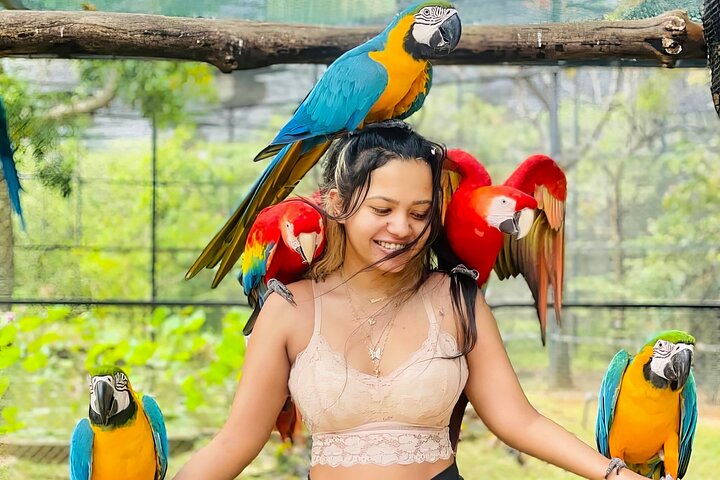
The park's collection includes both native Sri Lankan species and exotic birds from around the world. Among the highlights are brilliantly colored parrots and macaws—red, blue, green, and yellow plumage creating stunning visual displays as they fly between perches or socialize in their enclosures. The African grey parrots demonstrate impressive intelligence and some have learned to mimic human speech, delighting visitors with their vocalizations. Cockatoos with dramatic crests perform their natural behaviors including loud calls and entertaining displays.
Peacocks roam semi-freely throughout parts of the park, their magnificent tail feathers creating spectacular fans during courtship displays. The flamingo pond showcases these elegant pink birds in groups, their synchronized movements and vibrant coloring creating picture-perfect scenes. Owl enclosures allow visitors to see these typically nocturnal predators up close, including several rare species with piercing eyes and silent flight adaptations. Hornbills, with their distinctive large beaks and colorful casques, represent some of Asia's most charismatic bird families.
Native Sri Lankan species featured include the Ceylon junglefowl (national bird), various kingfisher species with iridescent plumage, and several endemic birds found nowhere else on Earth. The park plays an important educational role in teaching visitors about Sri Lanka's unique avian biodiversity and conservation challenges. Waterfowl sections display various duck, goose, and swan species, while bird-of-prey exhibits showcase eagles, hawks, and falcons with educational presentations about their hunting adaptations and ecological importance.
What to Expect During Your Visit
A typical visit to Hambantota Birds Park lasts 2-3 hours, providing ample time to explore all zones at a leisurely pace without feeling rushed. The well-maintained pathways are suitable for all ages including young children and elderly visitors, with plenty of benches for resting. The park is designed for easy navigation with clear signage directing visitors through the various sections in a logical flow. Morning visits are recommended when birds are most active and temperatures are cooler, though the park offers shade and remains pleasant throughout the day.
Photography opportunities abound throughout the park, with many birds comfortable enough with human presence to allow close-up shots. The aviaries and enclosures are designed to minimize visual barriers, allowing clear photos without excessive wire mesh or glass interference. Vibrant plumage, interesting behaviors, and attractive natural backgrounds create ideal conditions for both amateur and serious photographers. The park occasionally hosts special feeding demonstrations and educational talks that provide deeper insights into bird behavior, diet, and conservation.
The on-site cafeteria offers refreshments, snacks, and light meals, allowing visitors to take breaks without leaving the park. Clean restroom facilities are available, and the park maintains high standards of cleanliness throughout. A small gift shop sells bird-themed souvenirs, educational books, and local crafts. The park is fully accessible and family-friendly, with staff members available to answer questions and provide assistance. Special arrangements can sometimes be made for school groups or educational tours with advance notice.
Practical Information
Hambantota Birds Park is located just outside Hambantota city on the main A2 coastal highway, making it easily accessible from various south coast destinations. From Tangalle, the drive takes approximately 30-40 minutes; from Tissamaharama near Yala, about 45 minutes. The park is open daily from 9am to 6pm with last entry at 5pm. Entrance fees are very reasonable—typically around 1,500-2,000 LKR for foreign adults and 500-800 LKR for children, making it affordable family entertainment.
The park provides adequate parking for both private vehicles and tour buses. Tuk-tuks from Hambantota town charge around 500-800 LKR for return journeys including waiting time. Many south coast tour operators include the birds park in day-trip itineraries, often combining it with nearby attractions like Bundala National Park, the Hambantota Port viewpoint, or the stunning Mahamodara Beach. The combination of wildlife experiences—wild safaris at Bundala followed by up-close bird encounters at the park—creates memorable contrasts.
Family Visit Planner: Ages & Activities Guide
Hambantota Birds Park is one of southern Sri Lanka's best family-friendly attractions. Here's how to plan your visit based on children's ages and interests:
👶 Toddlers (1–3 years): The park's flat, paved pathways accommodate strollers easily. The colorful macaw and cockatoo aviaries are the biggest hit — bright colors and mimicking sounds captivate little ones. Allow 1–1.5 hours. Shaded rest areas with benches are available throughout.
👧 Kids (4–10 years): The interactive feeding sessions (10:00 AM and 2:30 PM) are a highlight — children can hand-feed parakeets and lorikeets with seed sticks (LKR 200 each). The bird show featuring trained parrots runs at 11:00 AM and 3:00 PM. Allow 2–3 hours for the full experience.
🧑 Older Kids & Teens (11+): The raptor enclosure and flamingo lagoon appeal to older visitors. The park's photography opportunities engage camera-minded teens. Combine with nearby Hambantota Salt Pans or Bundala National Park for a full-day nature itinerary.
Visitor Tips
- Best visiting time: Early morning (9-11am) when birds are most active and weather is cooler
- Bring camera: Excellent photo opportunities; telephoto lens helpful but not essential
- Wear comfortable shoes: Pathways are paved but you'll be walking for 2-3 hours
- Sun protection: Hat and sunscreen recommended despite shaded areas
- Respect the birds: Don't tap on enclosures; keep voices reasonable; no feeding unless permitted
- Allow enough time: Rush visits miss details; plan minimum 2 hours
- Perfect for kids: Educational and entertaining; children love the colorful birds
- Combine activities: Pairs well with Bundala safari or Hambantota sightseeing
Conservation and Education Role
Beyond entertainment, Hambantota Birds Park serves important conservation and educational functions. The park participates in breeding programs for several threatened species, contributing to global conservation efforts. Educational programs teach visitors—especially children—about avian biology, the importance of biodiversity, habitat conservation, and environmental protection. By creating positive associations with birds and wildlife, the park inspires the next generation to value and protect natural habitats.
The facility also provides refuge for injured or confiscated birds that cannot be returned to the wild, offering them quality care in appropriate habitats. Staff work with wildlife authorities to rehabilitate birds when possible and provide permanent homes when release isn't feasible. Through these efforts, the park contributes meaningfully to Sri Lanka's broader conservation landscape while providing visitors with memorable wildlife encounters that don't disturb wild populations.
Visit Hambantota Birds Park
Include the birds park in your south coast itinerary. We can arrange visits as part of day tours combining wildlife safaris, beaches, and cultural sites for a perfect family-friendly adventure.