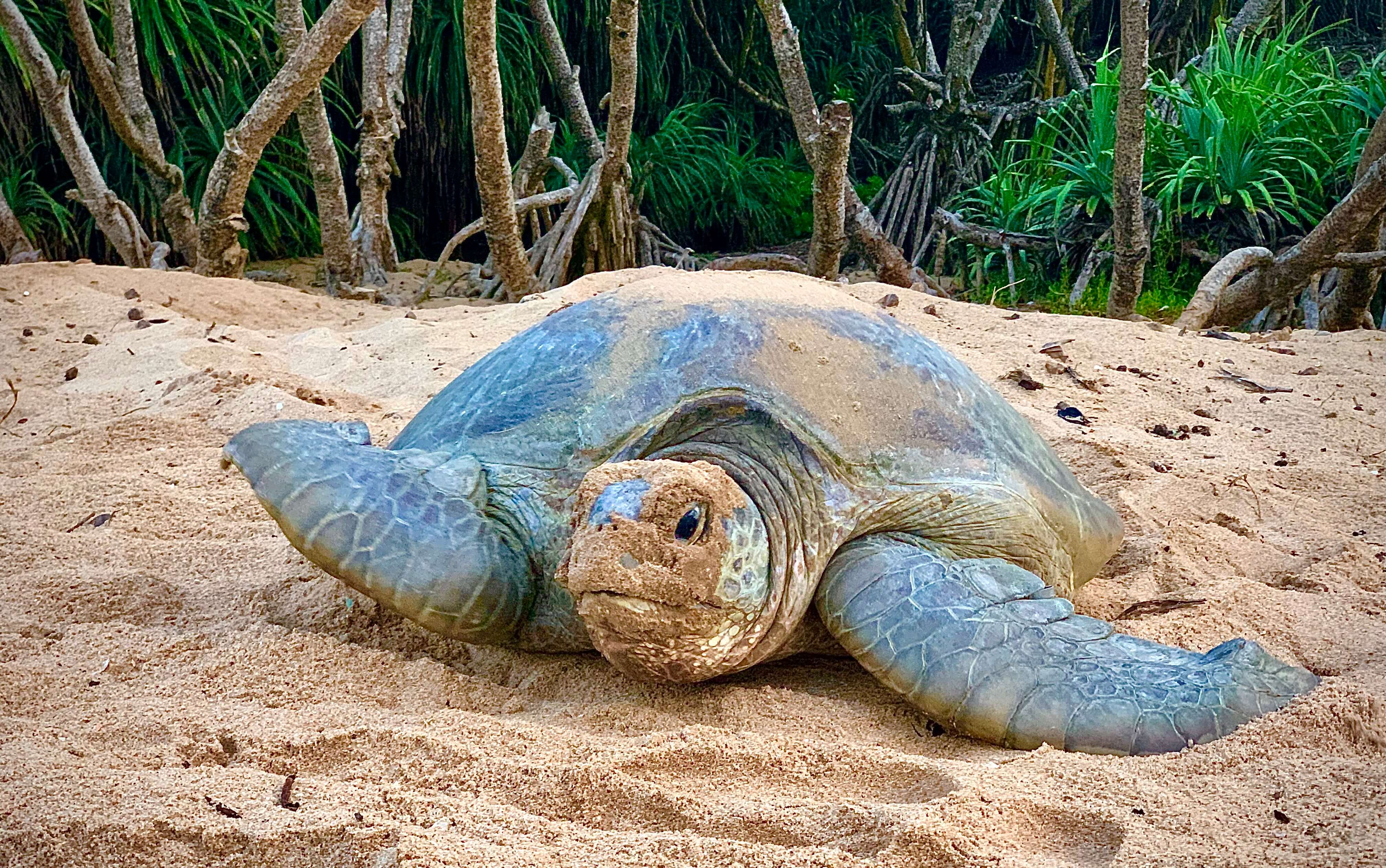

An Unforgettable Wildlife Experience
Imagine standing on a moonlit beach in southern Sri Lanka, watching an ancient sea turtle emerge from the Indian Ocean to lay her eggs in the sand. This isn't a scene from a nature documentary—it's a real experience you can have at Rekawa Beach, one of the most important turtle nesting sites in Asia. Located just 10 kilometers from Tangalle, Rekawa Turtle Watch offers visitors a rare opportunity to witness one of nature's most remarkable phenomena while supporting vital conservation efforts.
What makes Rekawa truly special is its role as a protected sanctuary where f...(truncated 2483 characters)...you're virtually guaranteed to see at least one nesting turtle, though multiple sightings are common.
Conservation Success
Since 1996, the Turtle Conservation Project has protected over 200,000 turtle nests at Rekawa, helping to increase turtle populations despite global threats to marine life.
Best Time to Visit Rekawa
While sea turtles nest at Rekawa throughout the year, certain months offer better chances of sightings. The peak nesting season runs from April to September, with May, June, and July being the most active months. During these months, it's not uncommon to see multiple turtles in a single night, sometimes including the massive Leatherback turtles that can weigh up to 700 kilograms.
Green turtles are the most frequently seen species year-round, followed by Olive Ridley and Hawksbill turtles. The rare Leatherback and Loggerhead turtles have more specific nesting periods, typically appearing between April and July. Tours operate every night regardless of weather (turtles nest rain or shine), though clear nights with good moon visibility offer the most magical atmosphere.
Turtle Species Guide: Identifying Rekawa's Visitors
Five of the world's seven marine turtle species nest at Rekawa Beach — making it one of the planet's most important nesting sites. Here's how to identify each species if you're lucky enough to see them:
🐢 Green Turtle (Most Common): Named for their greenish body fat, not shell color. Adults measure 1–1.2 meters, weigh up to 200 kg. Smooth, olive-brown carapace with 4 lateral plates. The most frequent nester at Rekawa, observed year-round with peak nesting January–April. Herbivorous — feeds on seagrass.
🐢 Olive Ridley (Common): Smaller at 60–70 cm. Heart-shaped, olive-grey shell with 6–8 lateral plates (distinguishing feature). Nests mainly March–June. The smallest sea turtle species visiting Rekawa.
🐢 Hawksbill (Occasional): Stunning amber-patterned shell with overlapping scutes (like roof tiles). Pointed, bird-like beak for extracting sponges from coral. Critically endangered. Nests sporadically at Rekawa, typically November–February. Seeing one is genuinely special.
🐢 Loggerhead (Rare): Massive head and powerful jaws. Reddish-brown carapace, up to 1.1 meters. Very rare nester at Rekawa — fewer than 5 nesting events recorded per year. Spotting one is an exceptional occurrence.
🐢 Leatherback (Very Rare): The world's largest turtle — adults can exceed 2 meters and 500 kg. Unique soft, leathery skin instead of a hard shell. Nests very rarely at Rekawa (1–2 documented per decade). A sighting would be a once-in-a-lifetime wildlife event.
Essential Tips for Your Visit
- Wear dark clothing: Bright colors can disturb nesting turtles
- No flash photography: Only red-light flashlights are permitted
- Book in advance: Tours have limited spots to minimize beach disturbance
- Be patient: Wildlife viewing requires waiting and respect for natural behavior
- Support conservation: Tour fees directly fund turtle protection programs
Ready for Your Turtle Adventure?
Join our expert guides for an unforgettable night watching sea turtles nest at Rekawa Beach. Every tour supports local conservation efforts.