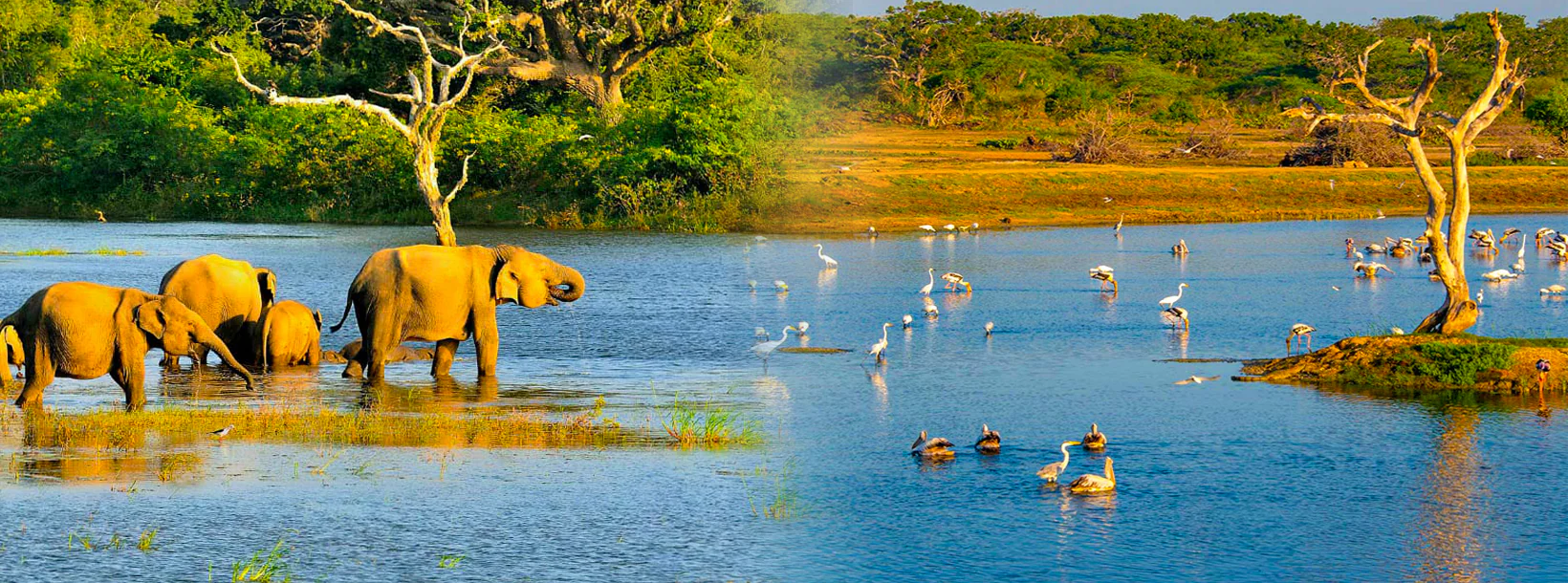

Sri Lanka's Flamingo Paradise
Bundala National Park, located between Hambantota and Tissamaharama on Sri Lanka's southern coast, has earned international recognition as one of the island's most important wetland ecosystems. Designated a Ramsar Wetland of International Importance in 1991 and a national park in 1993, Bundala's 6,216 hectares encompass lagoons, salt pans, thorny scrubland, and sand dunes that create vital habitat for an extraordinary 197 bird species. The park is most famous for its spectacular flamingo flocks—greater flamingos arriving in hundreds during migration season, their pink plumage creating unforgettable scenes against blue lagoon waters.
Beyond birds, Bundala hosts diverse wildlife including elephants, crocodiles, spotted deer, wild boar, and occasionally leopards. The five brackish lagoons form the park's heart, attracting thousands of waterfowl and wading birds that feed in the shallow waters rich with aquatic life. Unlike dense forest parks where wildlife hides, Bundala's open wetland landscapes make animal spotting relatively easy, creating rewarding safaris for both serious birdwatchers and casual wildlife enthusiasts. The combination of spectacular flamingo encounters, excellent general birdwatching, and diverse mammal sightings makes Bundala an essential stop for nature lovers exploring Sri Lanka's south coast.
Ramsar Wetland Site
Bundala's international importance is recognized through Ramsar Convention designation, acknowledging its critical role as wetland habitat for migratory waterbirds traveling between breeding and wintering grounds across continents.
The Famous Flamingos
Greater flamingos are Bundala's star attraction, arriving in large flocks particularly between August and April when hundreds congregate in the shallow lagoons. Watching these elegant birds—standing up to 1.5 meters tall with distinctive pink plumage, curved bills, and stilt-like legs—wade through water filtering microscopic organisms is mesmerizing. They often gather in tight groups creating seas of pink that shimmer in the sunlight, occasionally taking flight in synchronized movements that showcase their impressive wingspans. The flamingos' presence depends on food availability and water levels, so numbers fluctuate, but during peak periods the spectacle is truly magnificent.
Beyond flamingos, Bundala's bird diversity is outstanding. The lagoons attract numerous wading birds including painted storks, spoonbills, ibises, and various heron and egret species. Pelicans fish cooperatively, driving prey into shallows where they scoop up meals in their enormous pouches. During migration season (September to March), the park hosts thousands of shorebirds including sandpipers, plovers, stilts, and avocets that travel from breeding grounds as far as Siberia. Resident species include colorful kingfishers, bee-eaters, rollers, and numerous raptors including white-bellied sea eagles patrolling for fish.
The varied habitats support different bird communities. The lagoons host waterbirds, while surrounding scrubland attracts terrestrial species like larks, pipits, and endemic junglefowl. Raptors including eagles, kites, and harriers hunt over open areas. Serious birders can easily record 80-100+ species during a single morning safari, and the relatively open terrain makes observation and photography much easier than in dense forest environments. Bundala ranks among Sri Lanka's top three birdwatching destinations alongside Kumana and Sinharaja, each offering different habitats and species specialties.
Mammals and Other Wildlife
Bundala hosts approximately 30-40 elephants that move between the park and surrounding areas following ancient migration routes. Elephant sightings are common, particularly near water sources and during dry season months when they concentrate around remaining lagoons. Watching elephants drink and bathe while flamingos feed nearby creates memorable contrasts—massive mammals and delicate birds sharing the same wetland ecosystem. The relatively open terrain allows excellent elephant viewing and photography opportunities.
Other mammals include large herds of spotted deer (hundreds strong), sambar deer in smaller numbers, wild boar foraging in muddy areas, golden jackals hunting opportunistically, and grey langur monkeys in trees near the park boundary. Leopards inhabit Bundala though sightings are rare given the limited cover and their nocturnal habits. The lagoons and waterways host mugger crocodiles often seen basking on banks—approaching 3-4 meters in length, these impressive reptiles remind visitors that Sri Lanka's wetlands support apex predators. Monitoring their movements through binoculars from safari jeeps provides safe observation of these ancient reptiles.
The Safari Experience
Bundala safaris are conducted in open-top 4x4 jeeps that navigate the network of tracks winding through the park. Typical safaris last 3-4 hours, departing either early morning (around 6am) or late afternoon (around 2:30-3pm). Morning safaris offer cooler temperatures, active wildlife, and beautiful soft light for photography. The open wetland landscapes mean you'll spend time stopped at lagoon viewpoints scanning for birds with binoculars, driving slowly through scrubland watching for mammals, and pausing whenever interesting species are spotted.
Your driver-guide will know the best spots for flamingos based on current water levels and recent sightings, positioning the jeep for optimal viewing and photography. The relatively flat terrain and open vistas mean you often see wildlife from considerable distances—binoculars are essential for birding, and cameras need telephoto lenses for quality wildlife shots. The atmosphere is peaceful rather than intense; Bundala safaris feel more contemplative than the adrenaline-fueled leopard searches in Yala, focusing on observing diverse species in beautiful wetland settings.
Flamingo Season at Bundala: When the Lagoons Turn Pink
Bundala is the only place in Sri Lanka where you can reliably see greater flamingos in large flocks. These migratory visitors create one of the island's most spectacular wildlife spectacles:
🦩 Peak Flamingo Season (October–March): Flocks of 200–2,000+ greater flamingos arrive from their breeding grounds in the Rann of Kutch (India). The shallow alkaline lagoons provide ideal feeding conditions, and the birds' pink plumage against the blue water creates stunning photographic opportunities.
🦩 Best Viewing Months (December–February): Flock sizes peak during these months when water levels are optimal. The second and third lagoons along the park's main route offer the closest viewing — sometimes within 30 meters of the road. Early morning visits (6:00–8:00 AM) catch feeding activity when the birds are most animated.
🦩 Off-Season (April–September): Flamingos depart by April, but Bundala remains excellent for resident birdlife — over 200 species recorded. Spot-billed pelicans, painted storks, and black-necked storks are year-round highlights. Crocodile and wild elephant sightings improve during the drier months.
Essential Safari Tips
- Bring quality binoculars: Essential for birdwatching at distance; 8x42 or 10x42 recommended
- Telephoto lens needed: 300mm+ for birds; 200mm minimum for decent wildlife photos
- Sun protection crucial: Open terrain, intense sun; hat, sunscreen, sunglasses essential
- Morning preferred: Cooler, better light, more active wildlife; arrive early
- Field guide helpful: Bird identification book assists with Sri Lanka's species
- Stay patient: Wildlife viewing requires waiting; enjoy the process
- Book reputable operator: Experienced guides make huge difference in sightings
- Combine with Yala: Perfect pairing—Bundala for birds, Yala for leopards
When to Visit Bundala
Bundala can be visited year-round as it remains open during all seasons. The dry season from May to September offers the most comfortable conditions with minimal rainfall and lower water levels that concentrate wildlife around remaining lagoons. However, the best period for birdwatching, especially flamingos and migratory species, runs from August/September through March/April when northern hemisphere migrants boost species numbers dramatically. During peak migration (October-February), you might encounter flocks of thousands of waterfowl creating spectacular scenes.
The wet season from October to January brings afternoon showers but also green landscapes and fuller lagoons. Bird diversity remains excellent as many migratory species arrive during this period. Morning safaris often avoid rain, and dramatic cloudy skies can create beautiful photographic conditions. Whatever season you visit, the birdlife will be impressive, though August to March offers the highest diversity and best flamingo numbers.
Location and Access
Bundala National Park is located approximately 15 kilometers east of Hambantota and 20 kilometers west of Tissamaharama, easily accessible from either town. Most visitors base themselves in Tissamaharama (near Yala) or Hambantota area and arrange Bundala as a half-day safari, often combining it with Yala visits on multi-day wildlife itineraries. The park entrance is well-signposted from the main A2 coastal highway. Safari arrangements can be made through tour operators, hotels, or directly with licensed jeep drivers at the entrance, with typical costs ranging from 6,000-10,000 LKR per jeep depending on duration and included services.
Experience Bundala's Wildlife
Join our expertly guided safaris to witness flamingo flocks, diverse birdlife, and elephants in Bundala's pristine wetland ecosystems. We work with the best trackers for unforgettable wildlife encounters.